



You may think of digital DJing as something solely for EDM DJs, who show their skills by looping, chopping, rearranging, sampling, filtering and generally reinventing the dance music they’re playing “on the fly”, mixing in their own creations and re-edits, adding effects, and scratching over the top of it for good measure. And while this kind of DJing – especially when done with modern DJ controllers – is a fantastic match for digital equipment, it’s not the whole story, not by a long way.
There’s a whole new scene out there…
A lot of DJs use the same equipment to play very different types of music, from country & western, to pop, to hip-hop, to straight mobile DJing at weddings and the like. However, today we are going to look at how you can use your digital DJ kit and skills to successfully DJ at bars, clubs and venues on the indie scene.
Most decent-sized cities have a student population and a live music scene, and in these places, there are cool bars, clubs and venues where indie DJs do their thing. The live music/indie scene is every bit as cool as the club scene, although very different. So if you want to make the switch, you have to approach it correctly.

1. Prepare well
You’re a DJ, period. that means you can do indie too. As long as you genuinely like bands (ie you aren’t so into your EDM that anything without a 909 kick drum sends you to sleep) there’s no reason why you can’t add indie DJing to your arsenal. But you do need to show some respect and do a bit of prep work first. This involves:
Researching your local scene
Indie scenes tend to be localised, so you need to know the current bands in your area, the style of music they play, their big records, and who likes them. Of course, it goes without saying that you have to have knowledge of indie/guitar music in general and what tunes are “big” all over, but your local scene is more important. So go to a few gigs and hang at a few bars, trainspotting to get a list of the big tunes as you do. Hard life of a DJ, eh?
Knowing the crowd at the venue you’ll be playing at
If your city is lucky enough to have several venues that attract a hip young indie crowd, they will all be different. Even if you only have one such venue, the music may be different night-to-night. One may play alternative music of the last 4 decades. Once may play local scene songs and popular national/international indie. One may play only cooler, upfront stuff.
The crowd will expect the DJ to play to their tastes in each of these venues, so check out any venue you will be playing at first, and get a grip on the exact style they play.

2. Learn the indie DJing norms
Don’t get me wrong, it’s still perfectly possible to beatmix indie music like you play dance – although it’s not for beatmixing beginners, that’s for sure.
Nonetheless some indie music is indie/dance crossover anyway; most indie bands record to a click track so the beat is uniform unless they choose for it not to be; and with some software (such as Ableton) you can warp problematic tracks to a uniform beat anyway, at least in the sections where you’ll be likely to want to mix them. (Andy Tokyo is an up-and-coming example of this style.)
However, there are many other ways of mixing indie, and depending on the type of music that’s popular in your chosen venue, you may want to use these predominantly – ie not trying to beatmix music that fundamentally wasn’t made to be beatmixed. For instance, you need to know how to:
Blend tracks
Lots of indie fades or ends abruptly. So it’s perfectly acceptable to just blend or start a new track when another one ends.
It doesn’t stop you counting the beats in your head and starting the next track on the downbeat all the same.
(A good way to learn how to do this is to listen to decent indie/alternative radio stations and see how they do it.)
Mix tracks by meaning
You can get knowing nods of approval by mixing tracks that have some other reason to be together other than the musical.
For instance, you can play one track by every band that appeared at a popular gig at the same venue the week before; you can play tracks with the same words in the title or chorus; or play tracks that lyrically are obviously about the same thing.
Mix tracks by musical key
By using Mixed in Key or the free alternative Rapid Evolution to analyse your tunes before you DJ, you can easily mix tunes that are in key to get seamless blends without beatmatching. (By the way, if you use Virtual DJ to mix with, it analyses the key for you.)
As you can then sort by key in all digital DJ software, it is devilishly easy to play full indie sets with 100% key mixing going on – a surefire way to add a professional sheen that lesser DJs, jukeboxes or automix never could.
Mix tracks by energy level
Whereas BPM is not so important in indie (people don’t tend to dance all night, rather dance to the tracks they like, and they don’t expect smooth mixes), energy level is, as indie can vary so much in its “power”.
It is a good idea to use the rating stars in your DJ software or music library program as a way of tagging your tracks to denote their “energy” level, or “dancefloor filling” potential. That way you can start the night on your 1-stars and work up to the 5-stars, with your BPM happily going all over the place, but still fill the dancefloor and keep it full.
To keep a club happy, it is worth giving it a breather every now and then. If the dancefloor is flagging, be bold and drop the energy level a notch or two for 20 minutes. Give people time to grab another vodka & Red Bull and get ready to hit the floor with new energy after a break.
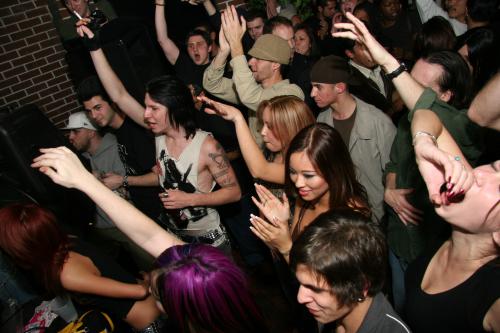
3. Find your own sound
This is the hardest but most rewarding bit. If you can establish a sound of your own within the indie scene in your town, you can start to make a name for yourself as an indie DJ.
The mixing techniques above will help as they’ll show you technically know your stuff, but consider the following ideas (and they’re only ideas – part of finding your own sound is working out your own twists) to help you distinguish yourself further from the crowd:
Use interesting remixes of known songs
Even the most diehard indie bands often have remixes of their songs, and some of these can be well worth your time.
By using indie/dance crossover mixes you can become more dancefloor friendly (and re-introduce some of your dance DJing skills at the same time) while not alienating the indie crowd.
Searching for obscure mixes (or even doing your own reedits in Ableton or the like) is a surefire way of getting props from music fans.
Play influences that aren’t indie music
This is one of my favourites. Just like good dance DJs will cleverly blend in influences from other, you should attempt to do the same to spice up what might otherwise be straight (and more forgettable) indie sets. Here’s some ways to do it:
- Say an indie band in your set is obviously influenced by funk. You’d find a good complementary funk original from the 70s and drop it into the set.
- Just about every indie style there is has a corresponding Beatles track, so influential have they been on guitar music for the 40-odd years since the 60s. So find “the” Beatles track for one of your big indie hits and slip that into your set.
- Many indie bands do cover versions of songs that were originally recorded by a different type of artist from another musical era – so find the original and play that instead. People will recognise the song from the current indie hit and you’ll have added some colour and interest to your indie set.
Search for interesting cover versions by known indie bands
Bands often record surprising cover versions (see point above). They may be hidden tracks on albums, or appear on their fan sites, or get played on TV shows. You can search on music blogs and the like for unreleased rarities and oddities by big names, or scour B-side albums, fan releases and live recordings.
Play the big album tracks as well as the singles
Many indie DJs stick to playing hits or releases.
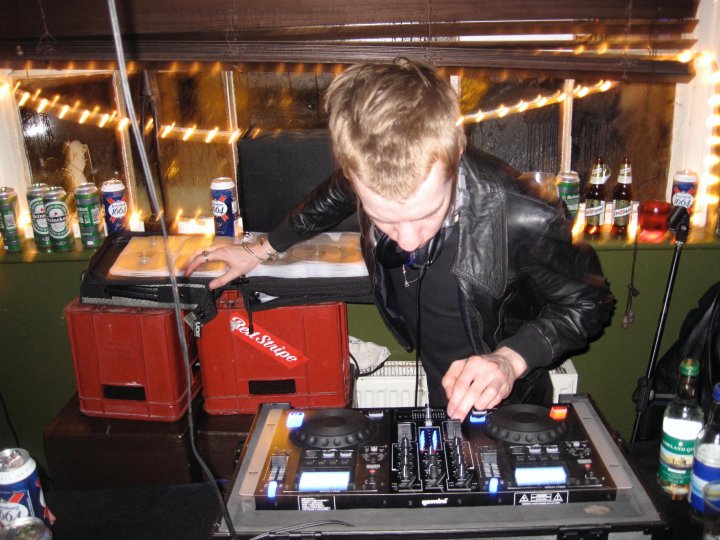
I’m not sure this is because they just don’t listen to albums by those acts, or whether they’re scared to, but any decent album will probably have 3 or 4 potential singles on it, and just because they haven’t been released as singles yet, it doesn’t stop you being a tastemaker and playing them.
Indie fans are a dedicated bunch and will appreciate the fact that you’re playing something a bit less obvious that the radio hits.
Finally…
I firmly believe that “it’s all just DJing”. Some of the best clubs I’ve been to play absolutely everything – every musical era, every musical style – and precisely because of this are cool as f*ck, because the music is just being played to a great crowd, in a great venue, by great DJs.
So if you get the chance to play an indie set, why not grab it? It will make you a better DJ, and hopefully these pointers will help you to do a better job and enjoy it more.


Phil Morse

![Bluetooth For DJs, Rotary Mixers, Cheap DJ Controllers [Podcast]](data:image/svg+xml;nitro-empty-id=NTA1OjcyOQ==-1;base64,PHN2ZyB2aWV3Qm94PSIwIDAgMTUwIDE1MCIgd2lkdGg9IjE1MCIgaGVpZ2h0PSIxNTAiIHhtbG5zPSJodHRwOi8vd3d3LnczLm9yZy8yMDAwL3N2ZyI+PC9zdmc+ "Bluetooth For DJs, Rotary Mixers, Cheap DJ Controllers [Podcast]")


![How To DJ Warm Up Sets [Live DJing Q&A With Phil Morse]](data:image/svg+xml;nitro-empty-id=NTA1OjM3ODU=-1;base64,PHN2ZyB2aWV3Qm94PSIwIDAgMTIwOCA2NDIiIHdpZHRoPSIxMjA4IiBoZWlnaHQ9IjY0MiIgeG1sbnM9Imh0dHA6Ly93d3cudzMub3JnLzIwMDAvc3ZnIj48L3N2Zz4= "How To DJ Warm Up Sets [Live DJing Q&A With Phil Morse]")