
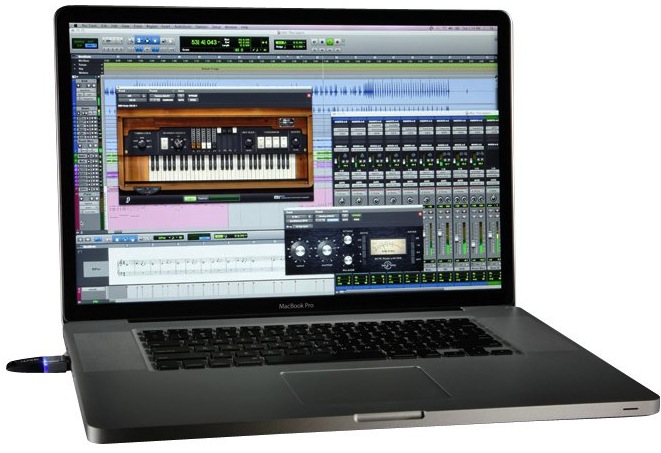
Digital DJ Tips3>

Learn How To DJ With Digital DJ Gear

5 Mistakes New DJ / Producers Always Make

DJ/producer

Production is more accessible than ever and people who are already DJs have a distinct advantage. Here are five tips to help you avoid the most common mistakes when taking your first steps.

• The author of this article, Chris Cartledge, is the writer and presenter of OD Total Music Production, a new 12-hour online video course that teaches production skills to beginners. Head over to OD Total Music Production to find out more about how you can learn to produce!

As Phil quite astutely pointed out in his production mini-series over the last week, the biggest of the big-ticket events nowadays aren’t for DJs, they’re for DJ/producers.


But the unfortunate truth is that a lot of these acts are simply studio producers who have used the changing landscape of the DJ booth to masquerade their way inside it. And producers who get into DJing tend to be major proponents of the “press play” brigade. Quite simply, often, they’re not very good DJs. That’s where you come in…

The DJ’s advantage…
Now, it wasn’t always like that. Back in the 80s and 90s, DJs got into production as an extension to their craft. And today, just like then, if you’re a DJ thinking about extending your skill set and getting some of those masterpieces out of your head and into other people’s, you’re in a much better position to be a well rounded, successful DJ/producer than many of these guys.

But just as there are pitfalls for producers who want to become DJs, so there are just as many traps for unwary DJs making the leap to production from DJing. So to help you get a headstart, here are five mistakes I see DJs starting out in production make all the time – and how you can avoid making them.

1. Using your “DJ ears” to make tracks

I know, I know, we only have one set of ears – and that’s if we’re lucky! But when turning your hand to production, you’ll need to break some DJ habits or things will get messy quick.

As DJs we tend to play music too loud, and often with our sound system EQ’d rich and bassy. Don’t do it. Turn it down, and smooth it out! Listening to things at high volumes makes our ears close up to protect themselves, and while when DJing this isn’t really an issue, it is a nightmare for production. What’s more, it’s a nightmare that’s only compounded by having your sub turned on to the max. Combined, these two issues are the main culprit of why the track you thought was a floorshaker in your studio sounds like a wet fart anywhere else.
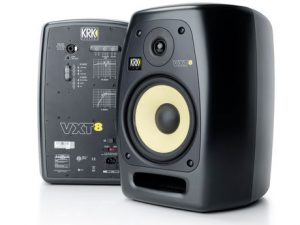
KRK - VXT8

You don’t need top-of-the range studio monitors to produce, attractive though they might be. It’s far more important to understand how to use what you have effectively.

A lot of people will tell you that you need good quality monitors to get into production, but that’s just not true. You don’t need a genuine Fender Stratocaster to learn guitar, right? The important thing is that you’re enjoying yourself and getting the most out of your gear, so just make sure you follow some basic rules like keeping your speakers at around ear height when you’re working and not putting them too close to the wall if you can avoid it.

Keep that volume down, too – you’ll be more accurate for longer and your neighbours will thank you. (If they thought your DJing was repetitive, wait until they get a load of the same four-bar loop repeating for a six-hour refinement session… side note, if you’re reading this and live next door to me, please invest in some headphones!)


2. Producing for the dancefloor

When producing you have the power to make every second of your track interesting. Gone are the days of dance music being created “DJ ready”, with long intros and outros, because in this exciting digital age we can loop up, cue, and all that good stuff with any track we like.

If you’re used to paying attention to that part of the tune that drives everybody crazy, you might realise you find it tough to make a coherent track…

If you’re used to paying attention to that part of the tune that drives everybody crazy, you might realise you find it tough to make a coherent track – one with a beginning, middle, and end. With that in mind, anything but your best on every beat and bar of the track just comes off as lazy – and you don’t want that, right?

Here’s my top tip: if when you’re eagerly showing your friends your newly produced scorcher you feel compelled at any point to make eye contact and say “wait for this bit coming up!” then you need to add more interest to that section. If you can’t make eye contact at all, then… well, perhaps it’s time to start a new project!

3. Thinking like a DJ with effects

Effects are a major part of production, but realistically they’re a fairly new development in DJing. For effects to be useful to DJs they need to be immediate and somewhat foolproof, but this also really cripples their power. In production, expect a lot more controls for effects, thus the scope to do vastly more with them too.

Ableton effects

Effects in production software are more complex and powerful than those typically found in DJ programs or hardware.

With great power comes great responsibility, though, and do the wrong thing and you can mess things up big time. The key to using effects in production is subtlety; whereas when you flick on a reverb in the DJ booth you want everyone to know about it, in the studio reverb is used extensively – but often you can’t even tell it’s there until it’s switched off.
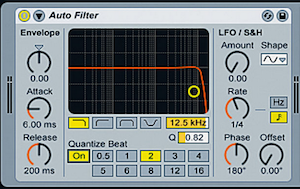
Being able to think about both the technical and creative applications of effects is a key production skill. Your well-honed ability to create interesting build ups and breakdowns with DJ effects will transfer really well to your productions, but taking your foot off the gas and really learning the delicate nature of studio effects will immeasurably improve your sound.


4. Running into the red

Now, there’s no shortage of people warning of the dangers of running into the red when DJing, so presumably you’re no stranger to this piece of advice. However if you regularly use a Pioneer mixer that just about has more red lights than green ones you’ll be forgiven for seeing a bit of a red emanating from your mixer from time to time – in fact, there’s actually a lot of extra “headroom” in good quality mixers that stops things turning to mush if things are only being overdriven a little, and similarly other high quality equipment can cope with things not being absolutely perfect.
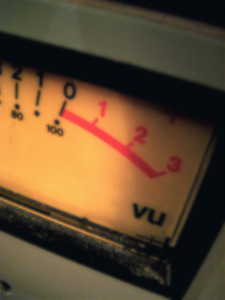
VU in the red

Keeping out of here is essential for great sound when DJing – but it’s even more important when it comes to music production.

In production, things are much more strict. You have to work within a certain amount of physical power when creating music, and going over it will create irreparable and nasty sounding distortion on your track. Modern “digital audio workstations” (DAWs), are very clever and allow you to fix this “clipping” anywhere along the signal chain, but proper understanding of how to set levels in your productions will make it a million times easier for you to see and understand what’s going on in your track.

That physical amount of sound doesn’t always translate to the perceived volume of a track, especially when comparing two tracks. You might have heard of compression, which is one of the most useful tools in a producer’s arsenal… but also one of the most misunderstood. In the right hands, compression can reduce the peaks of volume on a sound to smooth things out and allow the overall volume to become louder, but in the wrong hands you’ll end up with a painful, lifeless track (this is why a lot of people claim the “loudness wars” are killing recorded music).


5. Relying too much on sample packs and presets

At its heart, DJing is the art of taking separate pieces of recorded music and shaping them into an hour or more’s entertainment. That ability to hear things that go well together is a key skill to take into your foray into production, but getting out of the mindset of just consuming and instead starting to think about creating totally from scratch is one of the most important things you can do.

A huge number of producers make the mistake of buying synth after synth and never using anything but the presets…

A huge number of producers make the mistake of buying synth after synth and never using anything but the presets, never really understanding what all those intimidating knobs and sliders do. Still more base their entire library around sample packs, and lack the understanding of how to put their own twist on basic sounds.

Instead of buying an expensive synth, it’s much more beneficial to pick up a basic free synth and actually learn how it works; the concepts of sound design are more or less universal, and starting out with the basics is akin to learning to walk before you try to run.

Understanding how oscillators generate waveforms, are shaped by filters, how envelopes set the parameters for the synth’s controls and so on will empower you to create your own sounds and you’ll not only get much more value out of your synths (you may even find that free instruments are all you really need!) but you’ll be able to put much more of a personal stamp on your sound.


Want to learn production fast?

If you’re serious about getting started in production from a DJing perspective, here’s a great course for you. The author of this piece, Chris Cartledge, recently spent the past six months creating OD Total Music Production, a fantastic beginner production online video course similar to our acclaimed How To Digital DJ Fast course. At 12 hours long, it covers all you need to know to get started in music production. It even has links to free and great value software. It’s without doubt the best-kept secret in production training. Here’s an introduction video explaining a little more:


If you like the look of the course, you can find out more and buy over on the OD Total Music Production page. This is the first production course we’ve ever recommended, and as a Digital DJ Tips writer and a friend, I can personally vouch for Chris’s expertise, enthusiasm and level of service – he will be there to help you personally as you take your first steps in production.


Are you a DJ who’s successfully moved into production? What mistakes did you make? What mistakes do you see other DJs making when they first try their hand at producing their own material? Please share your thoughts in the comments.

Now go to:
What Exactly Is A DJ/Producer?
An Absolute Beginners’ Guide To DJ Effects
6 Ways To Win The Loudness War & Play Better Sounding DJ Sets

Want to escape the bedroom and play in public - fast?
Our 1000s-selling How To Digital DJ Fast video course shows you how.

Learn to DJ Free - email course plus bonus PDF book
Sign up for our weekly email course for beginners now...

Trouble choosing a controller? Visit the web's #1 guide!
DJ Controllers: The Ultimate Buyer’s Guide 2013.


Tags: , , ,


Creative Commons LicenseThis work is licensed under a Creative Commons Attribution-NonCommercial-NoDerivs 3.0 Unported License.

29 Responses to “5 Mistakes New DJ / Producers Always Make”
  1. Cosmic Rift says:

    And not to forget…

    Promoting yourself before you have something to promote.

    [ link ]
  2. Thanotopsis says:

    Hey guys!

    Not sure if you all have done it before, but it would be insanely useful for me if you guys gave some guidance on what monitor speakers to buy for production. Any help would be much appreciated. :)

    Cheers,
    -Gabe

    [ link ]
  3. Henry says:

    This is really interesting. You think you can posts more tutorials and stuff like this? Maybe do one on the basics like EQ, and compression.

    [ link ]
    • I totally agree!! I’ve been recording several mixtapes with Traktor’s built in recording, and then TRYING to make it sound professional using Audacity to compress/hard limit/amplify the whole *.wav file. However, I’m mostly just watching youtube vids on this and guessing what the right procedure is. Any insights about the post-processing side would be much appreciated!!

      [ link ]
    • Justin Wright says:

      check out Chris’s OD Music Production 101 on his website http://ohdratdigital.com/ it covers the basics and its free

      [ link ]
      • Chris says:

        Thanks for the link Justin! Yup, OD Music Production 101 is a totally free book/site, so that you can get a solid fundamental understanding if you prefer to go it alone.

        OD Total Music Production is all about showing you how to use your gear (the free gear we’ll show you!) to make music, rather than simply press buttons and get specific sounds – with specific, video based guidance :)

        [ link ]
  4. Michael Lawrence says:

    “If you can’t make eye contact at all, then… well, perhaps it’s time to start a new project” lmao

    Great article! I do find myself blasting sonsgs I make out of habit…but lately I have been catching myself and turning it down a bit.

    A good thing to remember is to try and listen to your music the same way your end user will. I doubt the marjority of your friends/people online will be blasting it like they are in a club…just mainly at a moderate volume

    [ link ]
    • Marcel says:

      Agree!

      I am a guy who started the other way arround,
      first producing, now i am slowy getting into DJing.

      “A good thing to remember is to try and listen to your music the same way your end user will. ”

      Another good tip is to finish a solid beta of your song
      and then don’t touch it for one-two days,
      then listen to it on different speakers and headphones
      and write everything down you notice.

      [ link ]
  5. DJ DanO says:

    So I have been thinking of producing ever since I started back DJing. (BTW I’m one of those over the hill DJ’s :) . I have diligently taught myself by mining the web and YouTube and of course Phil’s excellent course “How to Digital DJ Fast” and DDJT weekly e-mail course. I think I’ve got the basic mixing of tracks down fairly well. I’ve done my first gig which was successful with a few minor screw ups but filled the dance floor, lots of positive comments. Moved up from Algoriddm’s DJay with an iPad and iDJ Live controller to a laptop using Tractor Pro and an S4 controller. However, I think I am still on the steep learning curve with the basics (Tractor Pro and S4 you don’t learn or master in a day). So my question is: When is a good time to break into production if you are a Newbie? Can it or should it be done simultaneously while you are say still learning the ins and outs of basic Digital DJing? Should I get comfortable (which I am not) with vinyl and CDs and manual beatmatching for instance before even thinking about production? Or is there a new paradigm to all this in that the rules have changed with digital DJing…. especially now with the ease (so to speak) of production?

    [ link ]
    • Chris says:

      Ah, good question DanO! DJing and music production are sufficiently separate entities that you can jump into both at the same time – you’ll almost certainly get things that complement each other between the two, but you won’t get to a point, say for instance, when learning beatmatching means you won’t have to learn something about music production. On the other hand, having a really solid grasp of *how* music is made will probably help with beatmatching!

      The short version? Jump into both, immerse yourself, and they’ll work together through the merit of both being music, even though they’re not the ‘same thing’ :)

      [ link ]
      • B.B. Koning says:

        Thanks Chris!

        That is precisely the answer I was looking for. Thank you for putting it so concisely.

        I signed up for the course, and if your answer is any indicator of how you handle the lessons, this should prove to be just what the DJ ordered.

        And a big thank you to DanO for posing the question.

        [ link ]
      • Chris says:

        You’re welcome B.B.! It looks like I can only thread the conversation down so far so I’ve had to reply to my own post, but it’s great to have you on board :) Any questions, just get in touch!

        [ link ]
      • DJ DanO says:

        Thanks Chris! I’ll give it a try for 60 days… I like that you have a moneyback guarantee…you’ve obviously got some confidence in your product. DJ DanO :-)

        [ link ]
  6. Kaan says:

    Great article! I’m interested in starting producing really soon but I’m curious if the course would be beneficial for me, because the fact that I’m planning to buy Logic.

    [ link ]
    • Chris says:

      Hm, I think the best thing to do is think about *why* you’re planning to buy Logic. Logic is excellent software, there’s no question about that, but if you don’t have a reason like needing Logic to share ongoing project files with a friend what I would suggest is try Reaper for the course, and everything you learn will be transferrable over to Logic if you do decide to switch!

      To directly answer your question, Logic behaves very similarly to Reaper in a lot of respects but it’s not identical, so if you have no idea about how to use Logic it might take a bit of headscratching to get some of the Reaper/Logic specific functions – which amounts to around 25% of the course, give or take – to work for you! Of course, we’ll give you advice if you need it!

      [ link ]
      • Na_non says:

        Hi Chris.
        I am planning to learn how to produce music. I just move to another country to work for 1.5 years. Because i dont have my equipment …I thought is a good time to learn music production.
        I have ableton and apc 40, that i have learned the very basics…also i received maschine as a gift several months ago that i have not touched-learned- it really…Do I need reaper to take the course? Can I take the course with ableton and_or maschine? Will the course help to learn this programs also ?
        Thank you for the help…
        - Phil, sorry if this is not the right place to ask this questions_

        [ link ]
      • Chris says:

        Hi Phil,

        Realistically if you’re set on using Maschine OD Total Music Production will feel quite alien to you as you try to apply it, as Maschine is quite an individual piece of kit! Live’s a better fit but still not perfect, as mentioned in another reply above – don’t worry about asking any questions, it’s what I’m here for!

        [ link ]
      • na_non says:

        Sorry for the name confused..it was a message for phil morse..my name is Ramon …i will send you an email for some more questions…thanks again for the response.

        [ link ]
  7. D-Jam says:

    I’m honestly temped to take the course.

    [ link ]
    • Steelo says:

      I’m just a few hours in to the course and so far its excellent. Great work Chris! Any production that I’ve previously done, I taught myself from youtube videos and things but I’ve already learn’t so much more and I am quite impressed with Reaper too. In most fields, Its as powerful as any of the other big guys. You get a great master list of free software and plug ins and things that are top notch. Lots of warm fuzzy feelings and fun!

      [ link ]
      • Do it ! It was worth the price (for me) just to learn the basics of synths :) . Im about half way through now and loving it.

        [ link ]
  8. softcore says:

    Solid advice there…..the only thing I would add is:

    ABSOLUTELY AND WITH NO EXCEPTIONS finish your projects.

    Obnviously, some of your “producing experiments” may not be working out well and you find yourself fiddling with sounds and arrangement but make it your purpose to finish your tracks. I have been producing since 2003 and the most common mistake I have encountered when discussing with new producers is the fact they work on a given tune too much, jumping genres all the time, endlessly experimenting to make it the perfect track – but the truth is a track cant be perfect if it aint finished.

    My tip has always been:
    You become more of a better producer out of a finished mediocre track, exported and ready to be played in other people’s soundsystems than you would become out of 50 unfinished projects of your DAW.

    ;)

    [ link ]
    • Ron says:

      Now that’s good advice! I’m one of the 50 unfinished projects guys. I’ll start to finish them from this day. Thanks!

      [ link ]
  9. BelgianJungleSound says:

    One thing that I have never seen mentioned in any articles on production (and I only found out after I started trying to make tracks) is that your songs are never going to be as loud as properly mastered tracks. I guess it’s kind of obvious when you think about, but I just wished someone had told me how important EQing and compression, because when I started producing I got so caught up trying to make catchy melodies or whatever, only to try and mix my song with another song and realize it was crap (it doesn’t help that FL Studio’s default template has a Limiter with the gain turned up 3dB).

    [ link ]
  10. Great article, good comments underneath too.

    I started DJing with acid house in 89 as a 17 year old – as many of us did in the UK. I was doing alright but I knew it was getting the all important brackets after my name that would get me higher up the flyers. And, after running a club, the best way to do that was to make records. You got (get) better gigs only when the promoter thinks you’ll bring the punters in. How good you are, sadly, isn’t that important. What’s important is your brand – producing improves like nothing else.

    For me, I got into by buying a cheapo keyboard and learning how to play chords. Having that skill made my records stand out because they stood out due to their melodies. As I made deep house/techno.ambient, this was more important than the production techniques, which could be tweaked to sound great – someone mentioned mastering before: this is what mastering does, and is worth investing in.

    My tips for aspring producers:

    – Find records you want yours to sound like
    – Learn to play even to a basic level – you don’t need to be Liberace but being able to play melodies will take your tunes above the dross
    – Read the manuals/watch instruction videos
    – Don’t get too much equipment, some of the greatest dance records were recorded with a drum machine, a bass synth and an old keyboard
    – Get an engineer in to help with the mastering

    I rarely DJ these days – I am, after all, 40 – but still produce, and that’s something I’ll always be able to do, no matter how old I am. Production’s a skill for life, give it a go!

    My discogs: http://www.discogs.com/artist/Anthony+Teasdale#t=Credits_All&q=&p=1

    [ link ]
  11. JesC says:

    Making DJ friendly tracks, intro & outro are a must!

    [ link ]

Leave a Reply

Enter your details:

Or connect with:


Be constructive, be polite. Full guidelines here. Asking a question? Use the forum instead. Comment that don't meet our posting standards won't be published.


New to Digital DJ Tips? | What DJ controller? | Learn to DJ | Testimonials and Feedback | Privacy Policy