Digital DJ Tips3>

Learn How To DJ With Digital DJ Gear

7 Easy Ways To Sound Better Than Other DJs

There's loud, and there's unbalanced and distorted... which side do you come down on?

I just got home from checking out a venue where I will be DJing this winter here in southern Spain. It’s a bar down on the beach, and Javier, the Majorcan owner, has spent some sweet money on the place over the summer to make it more of an indoors/outdoors venue than just a terrace bar.

It’s now all sleek, lit panelling and decking, with heaters on the terrace, a “stand up” counter with an outside mojito bar, and a big, spacious interior complete with new DJ box. (Only big enough for a laptop and a controller – like your style, Javi!)


He’s also bought a new amplifier, and fitted some extra sound inside the place on top of the old system, which is now split between the terrace and indoors. And he showed me how he can have different volume inside and outside, to stop the place getting its wrists slapped for sound pollution (again).

Cut the midrange, drop the bass!

And that got me into thinking about how many DJs don’t take it on themselves to be responsible for the quality of the sound when they’re DJing – the balance and tone, how loudly or quiet they play, the distribution through the venue – often to the point where they ruin people’s enjoyment, making themselves look bad in the process.

In big clubs there is always a sound engineer, but when you’re playing smaller venues, it’s often up to you to make sure that everything sounds sweet.

Now, in big clubs there is always a sound engineer, but when you’re playing smaller venues, it’s often up to you to make sure that everything sounds sweet. And the fact is that sometimes the equipment you’ve got to play with is less than perfect. It could be that it’s parts of old sound systems cobbled together, there could be speakers that just don’t sound good, there could be others that are in the wrong place and maybe some that simply don’t work.

And throw into the mix staff who might not have the time or the knowledge to set up the sound right (not you, Javier…), and you’ve got the pieces in place for an awful sounding night – unless you, as the DJ, take control.

turn-the-volume-up-to-11

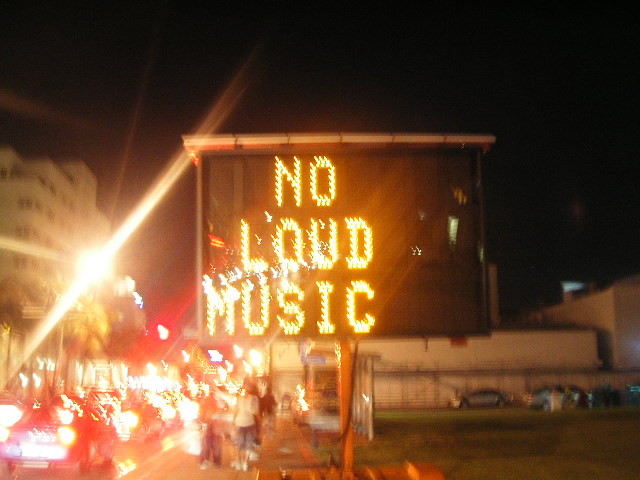
Just because the volume control has an 11, you don't HAVE to use it...

How to get the sound system singing for you

So when you play in a venue with no sound engineer, don’t be afraid to spend some time setting the sound up yourself.

Chances are the manager will thank you for it, and the people in the bar will definitely have more fun and enjoy your music better. You should be ready to:

  1. Check whether the sound level is OK overall. All PAs have a limit beyond which they will simply distort.
  2. Check the relative sound in different zones – we’re talking outside and inside, for instance, or in different rooms. Work out which amplifiers or volume controls affect which areas, paying attention to places where people sit, or gather and chat.
  3. Ensure you keep everything “in the green” on the mixer, and don’t let drink (or just getting carried away) tempt you to push things too high as the night goes on.
  4. Use your EQ boldly. It’s common to find sound systems where you need to set the bass, mid and treble a long way from centre just to get things sounding acceptable. Where the speakers are poorly positioned and there are just volume controls on the amps, this is your only way of compensating, so trust your ears and don’t be scared to make changes. (Remember it’s better to take away than to add, so EQ anti-clockwise, not clockwise.)
  5. Move the speakers – even rotating them a few degrees can fill dead spots and stop music deafening nearby tables.
  6. Use the balance controls . If somewhere on the system – in your DJ software, on your controller, on the house mixer (if you’re plugged through it) – there is a balance control, experiment to see which speakers it turns up and down. Nearly all club and bar PAs are mono anyway, so treat this like another volume control. If you can’t get access to the main volume controls, having a balance knob to get relative volume levels between speakers or groups of speakers can be a godsend.
  7. Walk around the venue often as the night is progressing – people “soak up” sound, especially bass, meaning you may need to make adjustments up (and down as the place empties, too)


bar culture

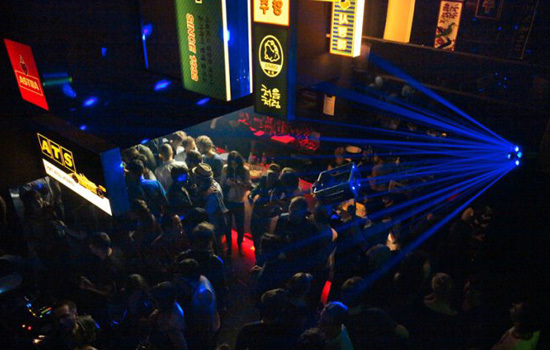
Music should dominate, sure, but it should add to the atmosphere, not ruin it.

Do it before they do it for you

The fact is that more often than not, you’ll be the only one who cares about the sound, until it’s so annoying that the irate manager or head barman comes over and turns it down for you… and then the only way to get it back up again may be to drive your mixer into the red.

At that point you’re compromising the sound quality for the sake of volume, plus you’re in a standoff with someone who, if you’d taken the time to keep things sounding sweet from the off, might otherwise have remembered you for the right reason – your music.

Being picky about sound is something I think DJs don’t do enough, and especially in smaller venues, it can really mark you out from the “everything-up-to-11″ brigade.

Do you hear DJs who plainly don’t know what their music sounds like out on the floor? Or do you work in a venue where they’re always messing with the volume and it drives you nuts? Tell us in the comments.

Now go to:
DJ Hearing Damage: What The Doctors Won’t Tell You
DJing in Nightclubs with Controllers and Laptops
5 Reasons Why Long DJ Sets Rule

Want to escape the bedroom and play in public - fast?
Our 1000s-selling How To Digital DJ Fast video course shows you how.

Learn to DJ Free - email course plus bonus PDF book
Sign up for our weekly email course for beginners now...

Trouble choosing a controller? Visit the web's #1 guide!
DJ Controllers: The Ultimate Buyer’s Guide 2013.


Tags: , ,


Creative Commons LicenseThis work is licensed under a Creative Commons Attribution-NonCommercial-NoDerivs 3.0 Unported License.

27 Responses to “7 Easy Ways To Sound Better Than Other DJs”
  1. Phat SwaZy says:

    Another great read from DDJT, I think a lot of what goes into making a DJ performance good is knowing al the little things that you have to be able to do outside of the booth. A lot of people are getting into spinning now, and its cool but a lot of people don’t know or realize what goes into making a good night of music. These articles shed light on these skills and also give us DJ’s a nice place to re-up our skills.

    [ link ]
  2. ToS says:

    I had venues that drive me crazy all night with no sweet setting on the eq.
    I had venues that are not affected by fine tuning the sound bkz the soundsystem was too poor. (ever saw AH Xone92 lit up like a Christmas tree?)
    I had venues with dedicated soundtech and we’ve been playing along nice but I’ve heard other DJs commenting that he was ruining their sound, and those are the guys that like to drive pots to 11.

    WHAT WAS MISSED IN THE ARTICLE:
    What is golden in a venue is good monitoring speakers, and you should set loudness on those to represent the loudness of the main soundsystem (if possible). That way you can more easily tell if it is too loud or distorted or just plain silly to have all three of those tracks mixed down.

    Cheers

    [ link ]
  3. Boney Collins says:

    This is always a problem, and advice i can give, if you use DVS or use an external mixer you can have the EX at the mixer flat and move the internal mixer (Traktor and Virtual DJ can) so this way you can work all the EQ range while mixing -it’s like using the gain to have all the fader path to work the volume mix.

    [ link ]
    • djcl.ear says:

      Uffs Hopelly this (extra mixer) is the last resort to fix the sound.
      Actually I usually do or advice to TAKE OUT the second mixer. Small venues (and sometimes large)usually have terrible noisy in-house mixer. But nope, don’t believe me take the brand and model and look for the Signal to noise S/N ratio, if it is greater than 85 or 90 dB you are lucky. With that amount of noise ADDED, your extra EQ and volume control advantage is overide.
      Instead HAVE a good sounding versatile DJ mixer to take to small venues (and as a back up of big venues) and arrive early enough to disconnect the local mixer and hopefully the -also- bad quality EQ that many times do little but blur your sound.
      Ah! make sure your mixer has balanced XLR or TRS(jack)master output connectors and carry the appropriate cables for the typical connections.

      [ link ]
  4. jorn says:

    It doesn’t cost much to have a decent compressor/limiter in your rack. Yeah, I know a lot of you just tote laptop & tables/controller and that’s not much of an option, but I do my own sound. A better exciter is on my near-purchase list, too. :)

    [ link ]
  5. D-Jam says:

    I so agree on this one…especially walking around a few times in the night to see how things sound.

    I get annoyed with DJs who seemingly think “in the red” and “as loud as possible” is the best way to do things. Even moreso I get mad when I walk into more “chill” venues like bars and lounges, and the DJ is pounding the music like it’s a big club or party bar.

    In those cases, I usually like to live by the idea that if you see people shouting into one another’s ears…then it’s too loud. I’m not saying this in terms of clubs where there’s dancing, but more the spots where no one dances, but more drinks and talks. I’d even throw events like that and do quite well, but DJ after DJ would be annoyed that I would make the night about the crowd, and not about them.

    It does say though why those guys don’t play anywhere.

    I wish more venues, promoters, DJs, and events would take not only sound quality and levels into account, but building a vibe and atmosphere. There is only so much room in the world for more “upscale” bottle service spots pounding Top 40 and filled with Jersey Shore wannabes.

    Anyway, I jumped on a tangent…but I get annoyed when DJs pound it too loud and even pound music that doesn’t fit the event.

    [ link ]
  6. Phil Morse says:

    Thanks for the positive feedback guys, I was slightly scared that I’d get bashed by the “up to 11″ brigade, but I agree – real DJs know where they fit in and see the bigger picture.

    [ link ]
  7. jorn says:

    Phil, the positive vibes are coming from the rest of the community who also cares about the “experience.” :) I’ve been DJ’ing professionally since 1984 (yikes) and even back then, I knew that a successful gig relied upon “the right music, at the right time, at the right volume.”

    The “up to 11″ brigade ruins their show, often in a way that isn’t necessarily obvious to the audience, but the audience knows something is wrong. Much like your earlier bits on mixing in the proper key, these subtleties please our brains when done correctly. And they grate on our brains when its wrong.

    This goes not only for music that is too loud (or soft, actually,) but also for a mix that is distorted. We also need to remember that distortion, or clipping, doesn’t just occur when the final amplified mix is driven too hard. It can also happen when anything in you chain is overdriven. Clipped soundwaves are guaranteed insanity producers! :)

    [ link ]
  8. Colin says:

    Great article. Too few djs understand the importance of the RIGHT volume.

    A couple of words of caution on using DJ mixer EQ controls to balance the system.

    1. The EQ on a DJ mixer is a blunt instrument for balancing a sound system; a little can go a long way. Don’t over do it.

    2. Beware of EQing so that it sounds good in the monitors. Club systems may have plenty of subs in the main PA but none for the dj, so an EQ that sounds right in the monitors may sound terrible for the crowd – check it out front!

    [ link ]
  9. Domas says:

    Great read. My advice is to get a partner in crime… This person will let you know if you are to loud or need to bring it up a little. It can be hard at some venues to leave the booth and walk around.

    Also show up early and scout the place and pay attention to the previous DJ and how he is using the mixer with volume, eq etc.

    [ link ]
  10. CompleteJ says:

    I was at a Josh Gabriel show last night here in San Antonio, TX, and this same thing happened. While I’m new to the game, I know what I like, and it was obvious what was happening. The lows were cranked, the volume was way up, and everything was muddied. You couldn’t hear the highs / vocals at all, and it really sounded like you were listening to constant bass frequencies. While I have heard Gabriel play in the past, I was unable to hear his mixing abilities and musical selection this time around due to poor choices in EQing for the venue he was playing.

    I recently started playing live, and the first night I had the comment, “I liked how it wasn’t loud. I can hear the people I came with, and I don’t need to yell for them to understand me.” I think that goes a much longer way than rattling people’s skulls to try and impress them, or whatever response that decision is going for.

    A great article, even if it is a common sense topic – common sense isn’t always that common.

    Oh, and never trust a deaf sound tech. That seems to be another good tip. :p

    [ link ]
  11. see why says:

    mad props to your blog!

    [ link ]
  12. D.J. Pegasus says:

    Yes! Thanks for writing this!

    Too many DJs have no clue how to properly use sound equipment and it drives me insane…it’s very rare that I can go to a club anymore and actually enjoy the music. (The only time in recent memory that the sound was done well was when I saw Tiesto at Privilege in Ibiza. Do we really have to go to super-clubs just to hear quality sound?!) I’m guessing money is to blame here: if you keep your levels in the green on all equipment and it’s not loud enough, spend the cash and get bigger amps and speakers. Pushing the levels into the red is not a substitute.

    I have experience with live PA setup and operation, so my methods seem foreign to most DJs. Here’s a tip: if possible, set yourself up as far across the room/dance floor as you can from the speakers (ditching the monitors of course) so you hear exactly what the crowd does and can adjust things accurately. Anything less is like trying to drive with smudgy glasses.
    And one more: calibrate your system!! Set your mixer so that when its master out level meter is clipping, so are the main amplifiers. Then NEVER GO THAT HIGH! If the system is calibrated correctly and your master out level is clipping/in the red, speakers will be destroyed (not to mention everyone’s ears.)

    [ link ]
  13. Chris says:

    There are some very good tips here.

    I currently record and mix film scores for a living and have been an recording and mixing engineer for over 20 years (I also own a post-production studio in LA). But, I started out as a DJ and club owner in 1983, so my roots are definitely here with the rest of you. I still gig now and then, just to maintain my sanity!

    Some of what you are referring to here is called “gain staging” in the industry, and it can’t be stressed enough how important it is to “stay in the green” at all times, all the way through the chain. Driving amps to distortion is never pleasant, and one of the biggest mistakes I see is when a sound reinforcement system is under-powered. Most people don’t understand that one of the biggest distortion culprits is under-powering speakers as opposed to over-powering them. Amps are load-dependant, so a simple rule, at least for me, is to always have more amplifier power than the speakers require. If a speaker is trying to pull more from an amp than the amp is designed to produce, the amp clips, and voila, you get nasty distortion. That’s why it’s so expensive to get really good sound – because good, clean, high-current amplification is not cheap.

    Adding to that, you brought up a very good point that many people ignore or simply don’t understand, and that’s how to properly use an EQ. You mentioned trying to cut rather than boost, and that is very smart advice. EQs are nothing more than frequency-specific amplifiers, so when you boost, you increase overall gain, and your potential for clipping increases. Depending on how clean your EQs are, you also increase noise. So if you can avoid boosting, you’ll save yourself potential headaches down the line.

    (Now that’s not to say I’m also not a firm believer in using the full range of an EQ if the situation calls for it and the EQs are clean enough. Many mixing consoles, such as SSL and Euphonix (which I own) have EQs that boost to 15db, and I say, they put it there for a reason, so use it! Just be smart about it.)

    Also note that filters are your friend, and do not cause the same problems that EQs do, for obvious reasons. Sometimes, just a simple HPF at about 30hz does wonders in cleaning up funky, muddy systems that can’t handle the lower octaves it’s being asked to reproduce.

    Nice article. Keep up the good work.

    [ link ]
    • Robert says:

      I wish EVERYONE here could travel back in time to Richard Long’s system in the infamous PARADISE GARAGE in NYC. Anyone who was there will know what that place (and Larry Levan) did to your senses! There are articles online on how that system was developed.

      [ link ]
  14. Tekmatic says:

    I just want to add to what Jorn said. Yes, a comp/limiter is nice, however, if the DJ is driving the signal path into the red, at any point in the chain, there’s still going to be clipping. Beyond just souding bad, excessive clipping can alsu ruin the speaker’s voice coil.

    [ link ]
  15. Toby says:

    Great Site & Article!

    One thing to remember is that an empty club sounds very different than a packed, so checking the sound on the floor is crucial.

    Cutting the low, lows 30Hzish as suggested earlier can clear up an muddy system. ( Every room has it´s own tones.) In my country it´s very common for Pa/rock companies to build the sound systems in clubs and commonly they set the filters to low in my view, i don´t want a lot of 50, i want 120Hz!! :) /Toby

    [ link ]
  16. flyer says:

    Great article Phil!
    I dj both with my own sound system and at venues. One thing I always bring is my “magic box”, it’s a “SPL VITALIZER mark II”. It helps me to get that extra crisp and punch out of my system, but when I play at venues with poor sound system this DSP really does MAGIC!

    Several times club managers asked me why the system sounds better when I play than when other dj’s play. Then I just push the “bypass” button and says “thats why”.

    The Vitalizer works with a pre-programed eq curve and you can adjust bass, mid and treble separatly. Then it got a bass compressor that really comes in handy if the bottom end is poor.

    There are a lot of these DSP’s on the market but the cheap ones often sounds like crap, but with a good one you can do magic ;-)

    [ link ]
  17. John says:

    This is so true!!! My first gig i had the manager 4 times come up and tell me to turn down the bass. At that point in my career however I thought i knew mor than i did, and ultimately got replaced by another DJ an hour later. Shit I was playing dubstep so my idea was bass all the way up!! lol but not true you must learn your EQ’s and this is a great guide so as not to get embarrassed in the end as I did.

    [ link ]
  18. I played in one seaside bar monthly for years and the gaffer is a hifi buff. He has high end hi-fi amps working as stereo so music sounds perfect to him in his chosen centre of the bar! I would always set up at the back and spent a frustrated year listening one side of a stereo mix as did anyone not in the sweet spot. In the end I upgraded my mixer to one where I could send the booth output as mono and brought my own bass bin and small PA… Another regular Sunday I did suffered the same fate until one night myself and the friday DJs realised the gaffers son switched ALL the amps to stereo when he played on a Sat night. But worst of all is the drunken/coke addled punter who insists on ever more volume… In the end my way of dealing with them (if the bouncers werent bothered) was to simply switch off the rig… Watch how they quickly become public enemy number one lol. Spot on article as always DDT!

    [ link ]
    • Phil Morse says:

      Good skills Pete! I guess there’s a world of difference between hi fi and dancefloor :)

      [ link ]
  19. Chris Mann says:

    In my teens, when I was dancing at parties or in clubs, I was already critical or appreciative of sound quality. Comes from having a father who’s a professional musician and hi-fi buff I guess. A bad setup (or badly-tuned setup) could really ruin a night, even if the funk was kickin’.

    Now I’m behind the “decks”, I turn my attention to the sound – not as much as I should, there’s rarely time, but I do. I’m lucky to work with a great sound engineer and she leaves things flat on the desk to let me play with the EQ on my Creative soundcard. The club has a main room and a lounge upstairs and I have tailored EQ curves to match these different rooms.

    The club’s management (rightly) don’t go for massive bass or hyper-volume so I accommodate that, even though some nights the engineer (Natalie, the star) gives me plenty of headroom to push the volume up a bit towards the end of the night. We all play fair with each other. Lucky me!

    [ link ]
    • Chris Mann says:

      Sorry to reply to my own post (saddo) but I should also add that I don’t use the EQ within VDJ but I do set Auto Gain+Remember because the management didn’t like my wavering levels with the DJ software I started out with.

      Also, I’d never have thought I could hear the difference between 16-bit and 24-bit output on my Creative X-Fi Go Pro but I can and I prefer the slightly smoother 24-bit sound. It doesn’t slow things down so I always use it.

      [ link ]
  20. Damien G says:

    Another thing to keep in mind is that our ears adjust to volume levels. what feels loud at first becomes “not loud enough” as our ears adjust to the loud environment. in addition, ears get fatigued from prolonged listening to high volume.

    when i shop for new cymbals i get about 20 minutes to hear the differences between this 16″ crash and that 16″ crash before they all sound the same. as our ears get tired certain frequencies start sounding like they are missing. it’s tricky to keep from turning those frequencies up to compensate. what ends up happening is we are driving frequencies to higher levels than was originally balanced because our ears don’t hear them, so our mix doesn’t sound as sweet anymore. late comers to the party notice it quite easily because their ears are “fresh” and haven’t been worn out yet.

    this also happens over the long term with sound engineers and other musicians. guitarists tend to crank their mids and bassists pump more bass. they are trying to compensate for long term hearing damage they may not be aware of.

    a great tool to have with you is a decibel meter. they run about $100 for a hardware unit in the US. smart phone users can download a free meter for android (sound meter lite) and iphone users probably have a good choice of apps as well. this will give you an unbiased reading (or at least a good estimate of just how loud things are). also a good thing to have if you are within sound levels and someone (like the authorities or a stuffy punter) want to complain.

    this may be the exception to “above all else, trust your ears” mantra. make a note of the meter readings on the mixer during soundcheck or the early part of your set to have a comparison for when it SEEMS like the music should come up.

    lastly, if you’re hanging out before your set or not the only artist on the decks that night, WEAR EARPLUGS. that way your ears get more protection and they are in a better state for when you’re in the booth.

    flailing the jesus arms,

    damien

    [ link ]

Leave a Reply

Enter your details:

Or connect with:


Be constructive, be polite. Full guidelines here. Asking a question? Use the forum instead. Comment that don't meet our posting standards won't be published.


New to Digital DJ Tips? | What DJ controller? | Learn to DJ | Testimonials and Feedback | Privacy Policy