


A student asked me recently if it’s possible to learn DJing using nothing but software – just an app running on a laptop, tablet or phone, with no hardware, no controllers, nothing else plugged in. It’s a fair question, and one that more people are asking as DJ software gets increasingly capable.
There are plenty of reasons why someone might want to keep things software-only. Maybe you haven’t got the budget for hardware yet. Maybe you’ve downloaded an app, got hooked, and you’re wondering why you’d actually need anything else when it already sounds great. Or maybe you just want to keep things simple – no expense, no cables, no extra gear to lug around.
So let’s look at whether this approach can work, and what the trade-offs are.
The short answer: yes, you can
DJing has always been about music selection. It’s about having great taste in music and wanting to share what you love with other people. You can absolutely do that from a phone, tablet or laptop with nothing else attached. The tools built into modern DJ software are very good at helping you mix tracks together – manufacturers have spent years making sure it’s easy to make things sound good using just a touchscreen or keyboard.
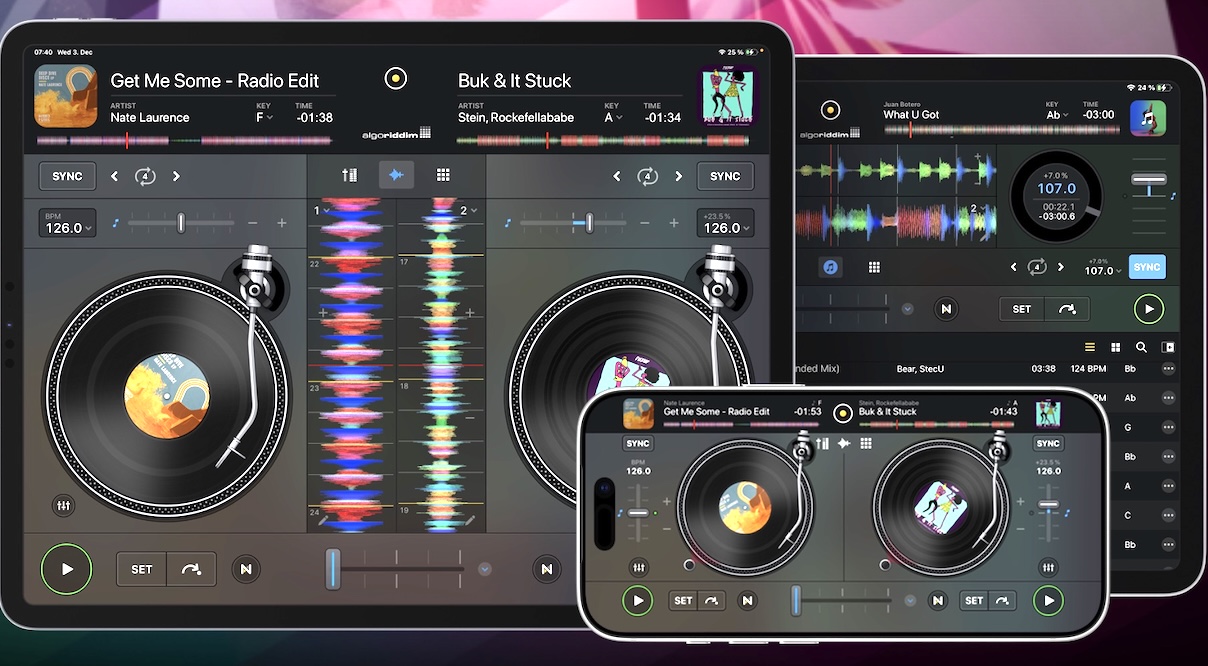
The software most people land on is Algoriddim’s Djay Pro, mainly because it tops the app store charts and works across phones, tablets, and laptops. There are other platforms out there, but most are designed primarily to work with controllers rather than standalone. With this one, touchscreens (and so on) are catered for fully.
More DJs do this than you’d think
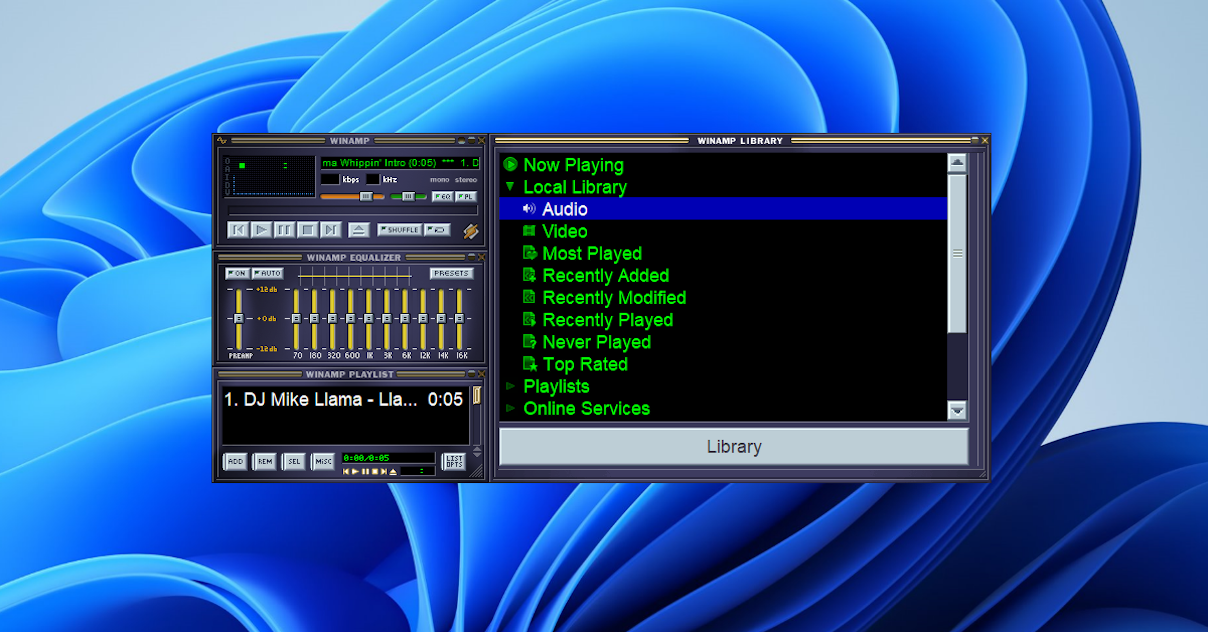
But actually, more DJs than you may think DJ with no hardware, using all kinds of apps. Firstly, there’s what I call the Winamp crew – the old-timers who’ve been DJing digitally since MP3s first appeared, happily hitting play on music playback software with nothing else. Sometimes they’ll have two instances open, loading on one while playing on the other. It works for them.
Then there are hospitality DJs working hotels and venues where it’s background music rather than a dancefloor – track after track, no real need for elaborate mixing. They use all kinds of stuff. Band DJs, too. I once saw the Prodigy’s DJ sat in the audio booth at Glastonbury with an open laptop and a copy of Djay Pro, programming the music before one of the biggest dance acts of all time took the stage.
Read this next: But Is It DJing? A Postcard From The Borders Of The Craft
And increasingly there are people who don’t even think of themselves as DJs. The borders around what DJing means have been breaking down. It can be anything from making transitions for social media to playing art festivals to being a resident to producing radio shows. In that wide church, plenty of people have drifted in without knowing what gear a DJ is “meant” to use. They’re just using what they’ve always used, and that’s fine – App Store freemium video/audio mashup apps, whatever.
So what are the drawbacks?
Traditional DJing requires four things: at least two music sources, a way to mix between them, speakers for the audience, and headphones so you can hear what’s coming next before they do. Software gives you the first two, but you’ll need accessories to separate headphones from speakers – and once you start adding those, a basic beginner controller includes all of that plus a lot more.
The big thing controllers add is jogwheels. These let you beat mix manually – matching tempos by ear and nudging tracks into sync. You don’t strictly need this skill anymore because the software does it automatically, but if you ever want to DJ seriously on unfamiliar equipment, you’ll need to know how. The skills you learn on software-only aren’t particularly transferable – they’re specific to that app.
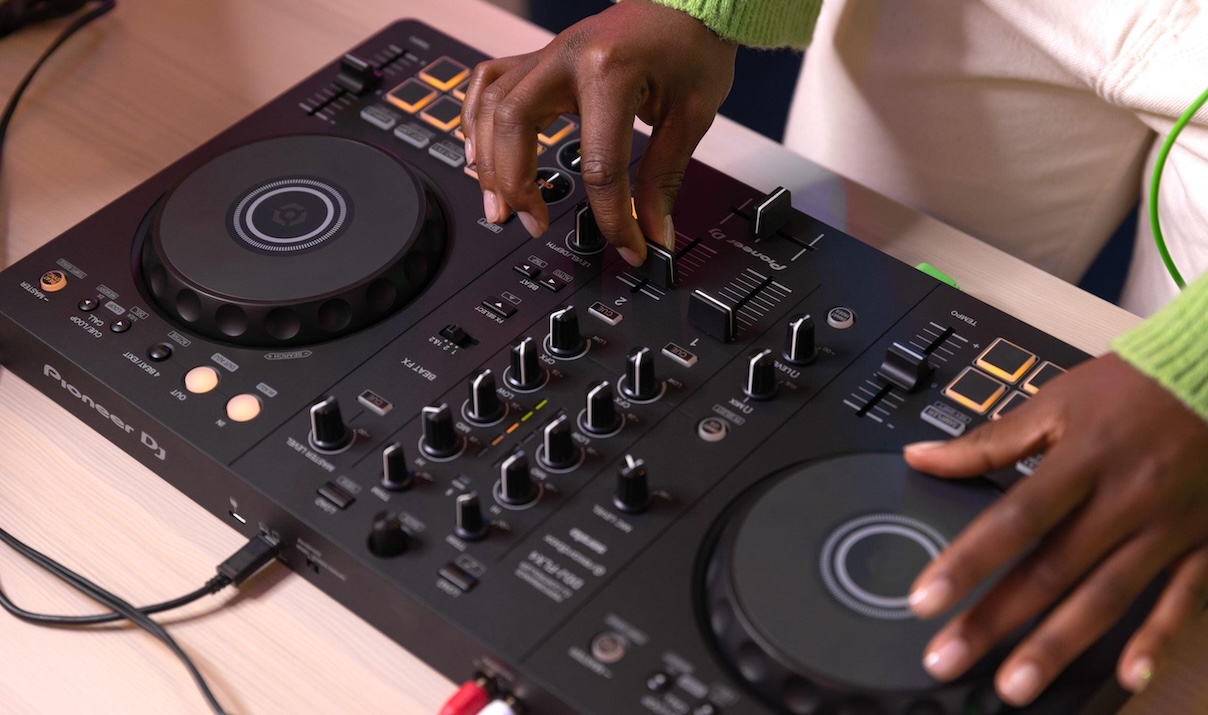
And honestly, it’s just not as much fun. Keyboards and touchscreens weren’t designed for the visceral experience of DJing. Having your hands on jogwheels and a mixer is like the difference between cycling a real bike and playing a cycling video game. DJing is a physical craft, and crafts tend to be more satisfying when you’re using the tools they evolved from.
What actually matters
Here’s the thing though: it’s what comes out of those speakers that counts. Most people truly don’t care how you’re getting the music to play. There’s no right or wrong way to do this anymore.
Whether you’re using software, a controller, standalone gear or a full club set-up, you’re working with the same three elements: gear, music, and what you do with the music on that gear. But all of that only leads to one thing: performing.
Until you’re actually playing for people, you’re just messing around. Yes, you’re getting the technical stuff right, collecting music, and learning how things work together, but the moment you start performing is when you actually start DJing.
DJing is about playing the right music for the people in front of you right now. You can do that from a phone. You can do that from a $3,000 controller. Your audience doesn’t care which!
Sign up to Tuesday Tips
 Free newsletter
 Your weekly digest of the latest training, gear reviews, industry news, and exclusive tips and tricks to help you stay ahead in your DJing.
We collect, use and protect your data in accordance with our Privacy Policy.
The five steps to DJing
In our book Rock the Dancefloor!, we talk about the five steps to DJing: gear, music, mixing, performing, and success. The biggest mistake you can make is getting stuck on the early steps – obsessing over collecting every track, getting the perfect gear, learning every mixing technique – and never actually getting to the performing bit.
Get the skills to rock ANY gig: The Complete DJ Course

Performing isn’t the goal. It’s the start line. That’s where you actually begin learning to DJ, when you test what you think might work in front of real people. It doesn’t have to be a crowd – it can be one person, two people, your family and your dog. But you should be producing an end result as early as possible.
The bottom line
Is it possible to learn to DJ on just software? Yes. As long as you actually start DJing on it. As long as you start performing what you’re practising. As long as you test your ideas in front of real people rather than endlessly preparing in private.
If you’re doing that, it really doesn’t matter whether you’re using software alone or any of the alternatives. Now get good, get out there, and make the moments!


Phil Morse

