


The Lowdown
The HDJ-F9s are an on-ear take on AlphaTheta’s HDJ-F10 wireless DJ headphones, using the company’s SonicLink tech for latency low enough to DJ with, plus Bluetooth for everyday listening and a cable as a fallback. They’re rugged, look great, and sound tight and punchy once you get the fit right. At £329 (with the transmitter you’ll need for non-SonicLink gear sold separately) they’re priced for pros, and they make most sense if your DJ gear already has SonicLink built in.
Video Review
First Impressions / Setting up
Style-wise, these are really nice: sleek, minimal, and with a reasonable amount of heft at 285g. They’re a world away from lightweight on-ears like the Sennheiser HD 25s or AlphaTheta’s own HDJ-CX (and the less said about the CX’s longevity, the better). The sliders are die-cast aluminium, and the silicone headband bends in the middle but stays rigid where the metal runs up each side. They feel utterly rugged and solid, the cups swivel for one-ear monitoring, and they fold flat for the bag.
Controls
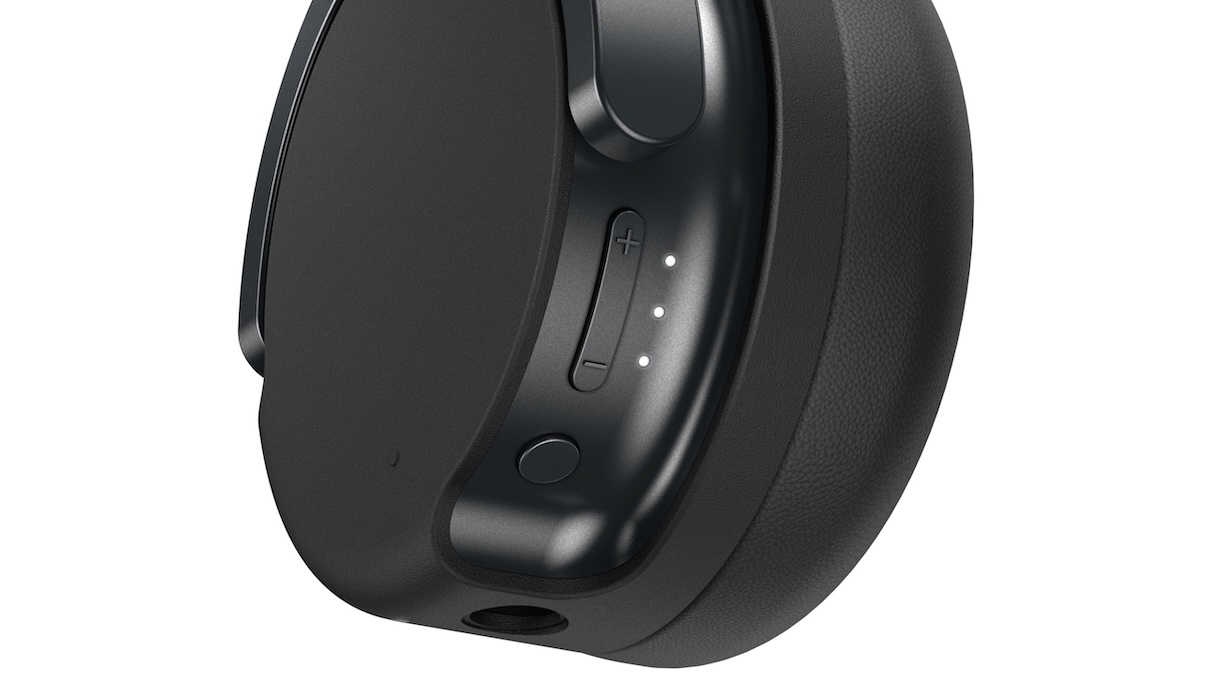
The right cup has nothing on it apart from a status light, and those lights look like the front of my wife’s Kia! You’ll love them or hate them, but you can change the colour and brightness or turn them off in the app. Everything else is on the left cup: microphone, multifunction button (power, pairing, and play/pause/skip in Bluetooth mode), volume buttons, a three-light battery meter, a 3.5mm cable socket and USB-C charging. On top sits the button that switches modes – hold it for two seconds and its light goes blue for Bluetooth or white for SonicLink.
In the box you get a 1.2m coiled cable that stretches to about 3m, a screw-on 6.3mm adapter, a USB-C to USB-C charging cable, and a nice zipped carry pouch with a hook on it. I always prefer a coiled cable to a straight one, because it doesn’t end up round your feet. It uses the same twist-lock plug as the HDJ-CX, HDJ-S7 and HDJ-F10, so cables from those fit too. Unlike the F10s, there’s no spare pair of ear pads, and a hard case is an optional extra.
Setting up
Pairing with compatible gear is simple. I tested them with the XDJ-AN all-in-one: hold the multifunction button on the headphones (with them switched off), press the SonicLink button on the XDJ-AN, and a pleasant voice tells you it’s connecting and then that SonicLink is connected. It was every bit as easy as pairing the F10s with the XDJ-AZ.
In Use
The whole point of SonicLink is latency low enough that you don’t notice it. AlphaTheta quotes 9ms (its figure, not our measurement), while Bluetooth is 40ms or more – enough to hear a gap between touching the gear and hearing the result, which is why normal Bluetooth headphones are no use for DJing.
In my testing I never noticed any delay at all: it was just like wearing wired headphones, and SonicLink sounded as good as the cable, too. When we reviewed the F10s two years ago, we said this kind of headphone would make real sense once DJ gear started coming with SonicLink built in. That’s now happening, with the XDJ-AZ, XDJ-AN and DJM-V5 all having it, and I’d expect more to follow. In SonicLink mode the volume buttons on the headphones are disabled, so you set your level on the gear, as you would with a wired pair.
New for the F9s is SonicLink Touch Pairing. There’s an NFC area on the left cup, and on supported gear you simply touch the headphones to the unit to pair – they’ll even switch themselves on. AlphaTheta names the DJM-V5 (after a firmware update) as supported, while the F10s can’t do it at all. Button pairing on the XDJ-AN only took a few seconds anyway, so I wouldn’t buy them for this feature alone.
The optional transmitter
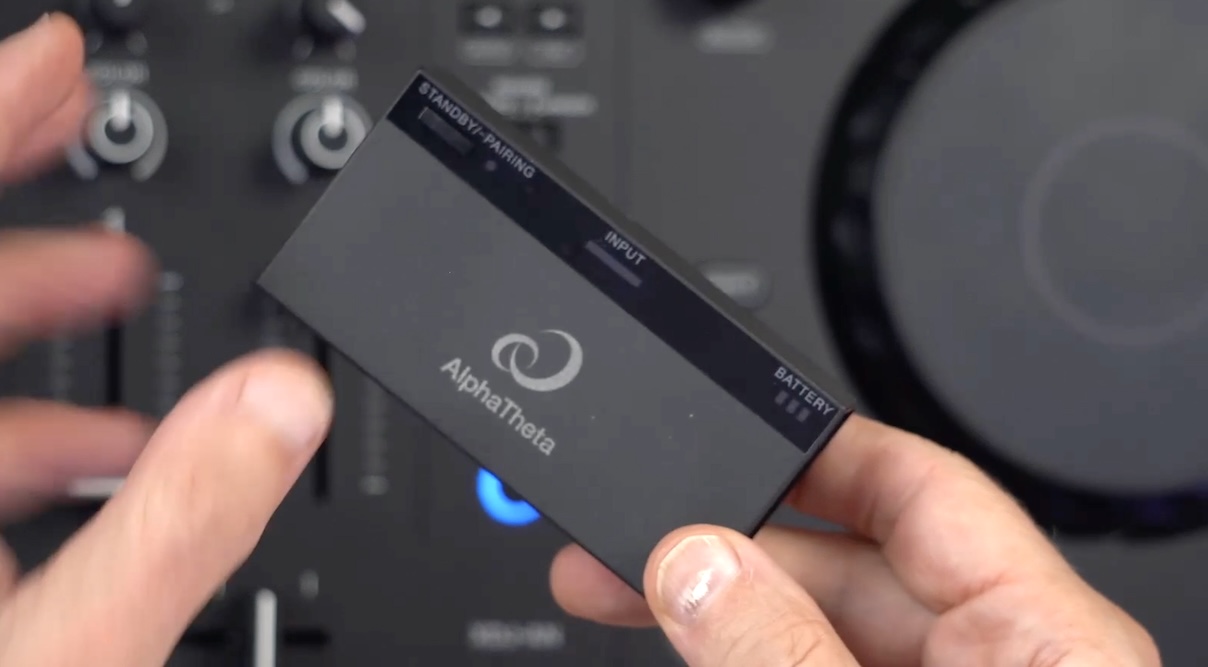
For gear without SonicLink, there’s the HP-TX01 transmitter (£109 / €129, sold separately). It plugs into any headphone socket, charges over USB-C, and pairs just like built-in SonicLink, with AlphaTheta rating its battery at about nine hours – more than enough to match the headphones with the LEDS turned on, about the same turned off.
Fit matters a lot with these. You have to pull them down and push them properly onto your ears, because if you just throw them on and they sit on top of your ears they sound tinny – I did wonder at first what was wrong with them. Get the fit right and the bass is plenty deep, and the isolation, which is very good with these pads, improves too.
They do sound noticeably different to the over-ear F10s, though. Those are warm and enveloping, a bit boomy even, whereas these are taut and punchy. That’s on-ear versus over-ear: forget what you read in the specs, because with headphones it’s all about how they fit and hold your ears. Both are perfectly fine for DJing, the F9s arguably a bit better, but you’ll already know which style you prefer.
On Bluetooth, which I used to and from the office, they’re a solid everyday pair, with multipoint for two devices at once, Google Fast Pair and Windows Swift Pair, and the multifunction button handling play/pause and skipping. The mic is for calls, though the manual says that means normal phone calls only, not calling apps on your phone or computer (didn’t test this).
Battery and app
AlphaTheta quotes seven hours on SonicLink and 13 hours on Bluetooth with the status lights on, or nine and 25 with them off. That’s enough for most DJ nights, but less than the F10’s nine and 30 hours. Charging takes about 2.5 hours over USB-C (30 minutes gives around 2.5 hours of use), but they won’t charge while switched on, so there’s no topping up mid-set while wearing them. If they do run flat, plug the cable in and they carry on as passive wired headphones.
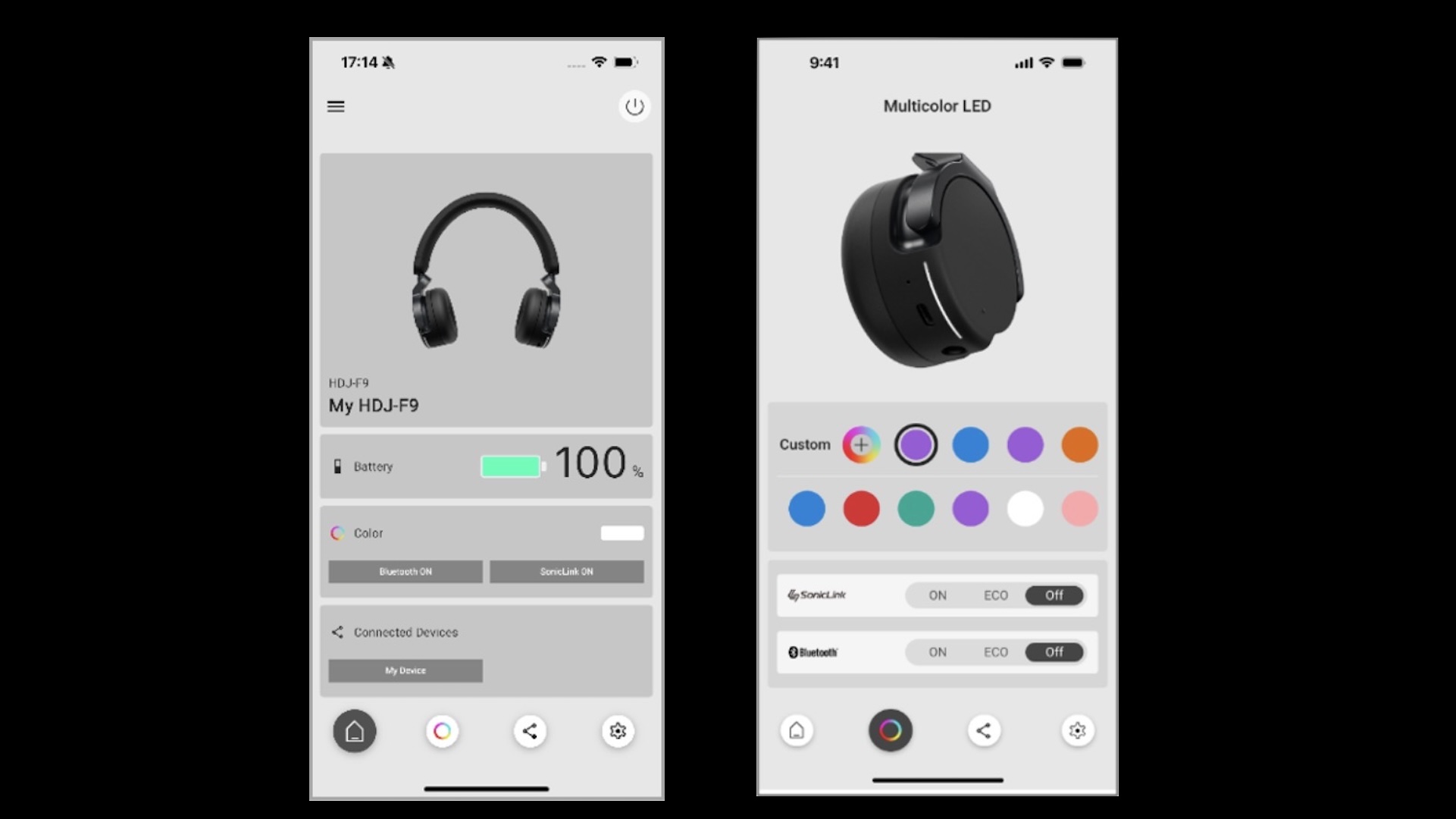
The Headphones Connect app lets you set the light colour and brightness for each mode (or an Eco mode that lights them intermittently to save battery), rename the headphones, set auto power-off, assign the triple press to Siri or Google Assistant, play a sound to find them, and update firmware. It only works in Bluetooth mode, you need an AlphaTheta account, and AlphaTheta says the iOS version is coming “at a later date”.
It’s all optional, and you lose little by ignoring it. You might be asking why you’d bother with wireless headphones for DJing at all.
Conclusion
The HDJ-F9s deliver on everything AlphaTheta promises. They’re rugged, good-looking on-ears that sound tight and punchy once fitted properly, the SonicLink latency is unnoticeable, and Bluetooth plus a cable fallback cover every other situation.
They’re not cheap, though, and they aren’t the entry-level SonicLink headphones we expect AlphaTheta to make at some point. Adding £329 to a £999 XDJ-AN is quite a lot extra, and XDJ-AN owners may prefer to wait for a cheaper pair. With pricier gear like the XDJ-AZ, or a modular set-up built around a DJM-V5, the price makes more sense. They’re aimed at pros and touring DJs rather than hobby DJs anyway, and if you’d need the transmitter you’re looking at £438 / €508 all in.
The alternatives
If you prefer over-ear, the HDJ-F10s (launched at $389 / £369 / €439) are only a bit more and add noise cancelling, longer battery life and a warmer sound. The AIAIAI TMA-2 DJ Wireless ($300) is the other obvious rival: no DJ gear has its W+ Link built in, so you always need its transmitter, but that’s included, smaller and sleeker than AlphaTheta’s, and AIAIAI quotes simialr latency and over 20 hours of battery.

What it can’t match is one-touch pairing with gear that already has SonicLink inside, so if you own that gear, the F9s are well worth considering: Rugged, punchy, lag-free on-ear headphones that make it hard to return to wired.
