

The Lowdown
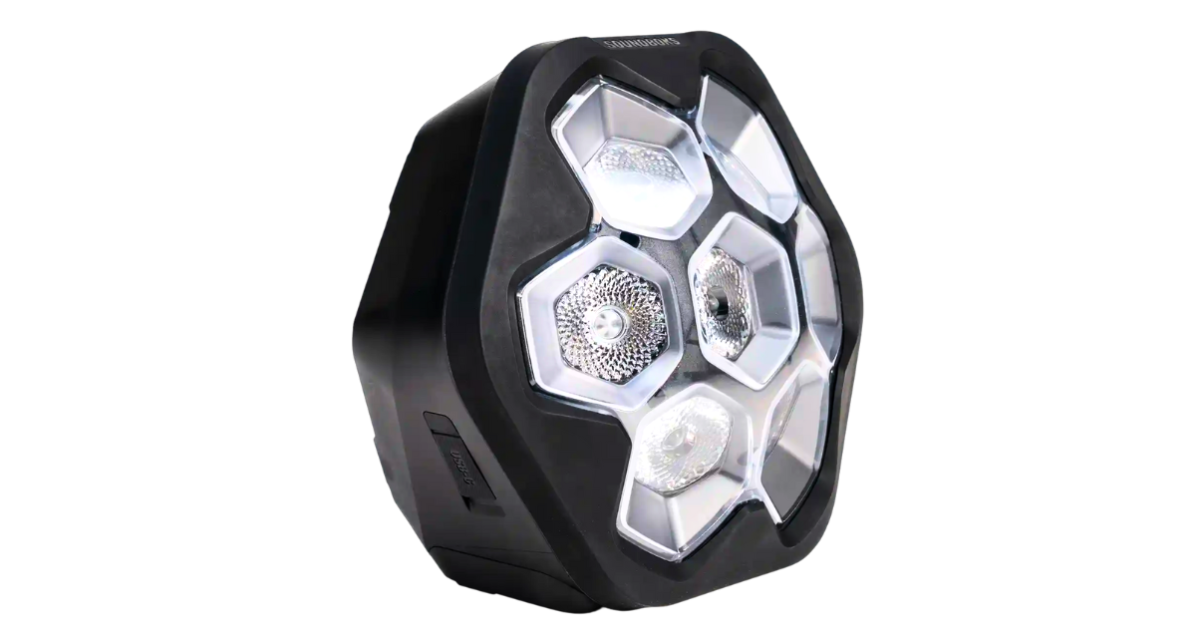
The Lightboks is Soundboks’ first venture beyond speakers, an audio-reactive party light that listens to any music source and creates synchronised light shows. It’s a clever bridge between consumer party lights (that are usually rubbish) and professional lighting that’s too complex for casual users. With its TeamUp wireless linking feature and three energy modes, it’s clearly aimed at party hosts and beginner DJs who want instant visual atmosphere without the faff of DMX programming.
Don’t have our latest DJ gear guide? Click here to grab your free copy
Video Review
First Impressions / Setting up
Opening the box, I was immediately struck by how substantial the Lightboks feels. This isn’t some flimsy plastic party accessory from the local electronics shop. The hexagonal design with its honeycomb front panel looks properly smart, and at 1.75kg it has enough heft to feel quality without being a burden to carry. The rubber bumpers around the edges and the built-in handle on top make it clear this thing’s designed to travel.
Set-up couldn’t be simpler. There’s no pairing needed with your speakers, no cables to connect for audio input, nothing. You literally just turn it on and it starts listening through its built-in microphone. The Soundboks app connected instantly via Bluetooth, though you do need to input the serial number if you want it to remember the device.
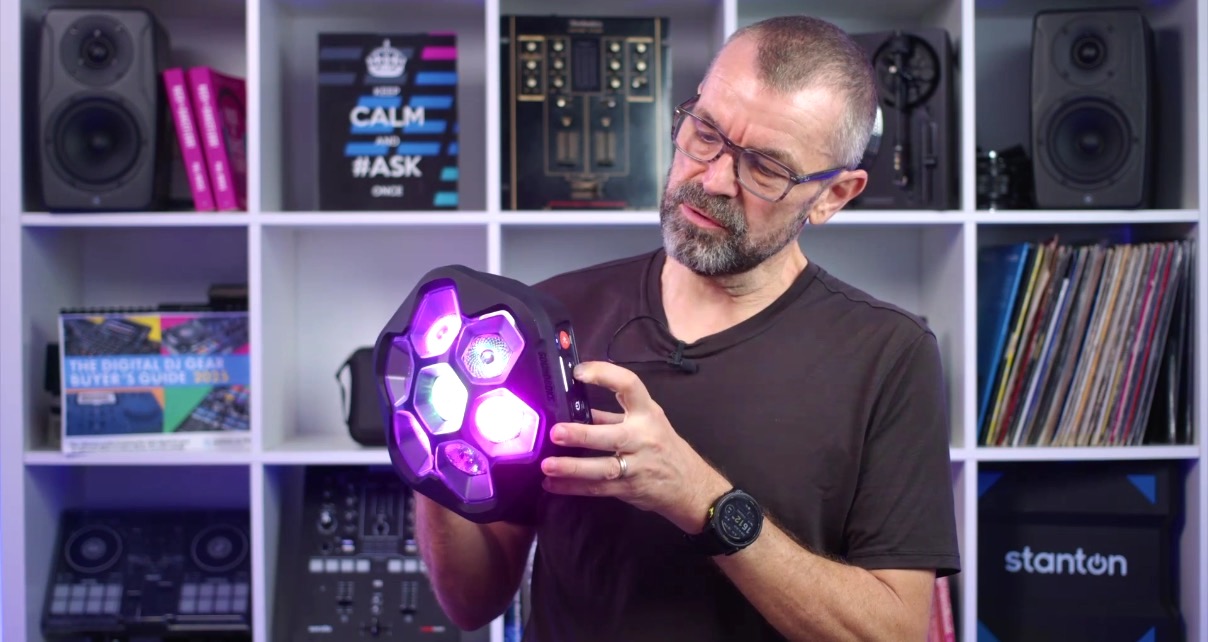
The control panel on top is straightforward with just power, energy level, brightness, and battery status. No USB-C cable or charging brick in the box though, which at this price point feels a bit cheeky. You’ll need to provide your own 30W USB-C charger for the two-hour charge time. The IP65 rating means it’s properly weatherproofed for outdoor use, and those rubber corners should handle the inevitable knocks and drops that come with mobile use.
In Use
Here’s where the Lightboks really shows its worth. I tested this both in the studio and at multiple home sessions, and the TrackSync (sound-to-light) technology impressed me. Unlike cheap sound-to-light units that just flash randomly or pulse with the bass, this actually interprets the music intelligently. Breakdowns build gradually with subtle colour shifts, drops hit with proper impact, and there’s a musicality to the light patterns that feels considered rather than random.
The three energy modes make a difference to how the light behaves. Chill mode keeps things smooth and ambient with gentle colour transitions that work brilliantly for background atmosphere during dinner parties or warm-up sets. Dance mode adds more dynamics and responsiveness, perfect for when the energy starts building. Rave mode goes full strobe effect on the drops, though I found myself using Dance mode most often as it strikes the best balance.
The clever bit: TeamUp
What should really set this apart from other party lights though, is the TeamUp feature. While we only had one unit for testing, being able to sync them wirelessly through the app should be a game-changer. They are designed to respond in perfect unison, creating a cohesive light show rather than the usual chaos of multiple unsynchronised lights. This solves one of the biggest problems with traditional sound-to-light systems. You can apparently link up to a hundred units, though even two or three would transform a small event.
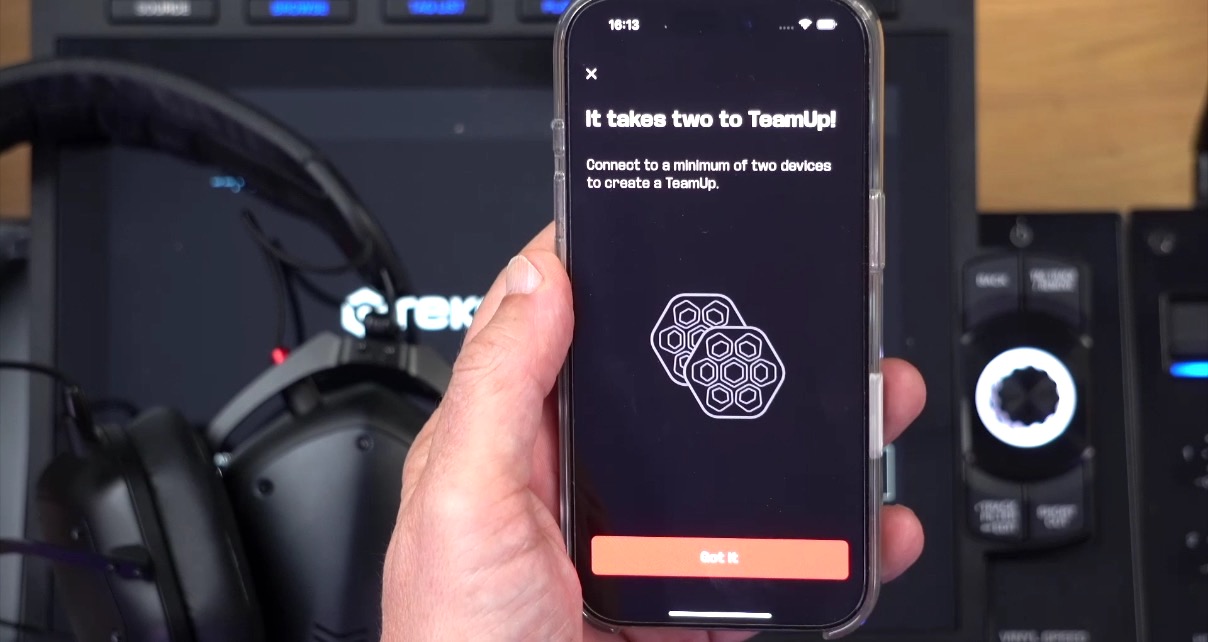
The ten colour palettes give enough variety without overwhelming you with options. Each palette is well-curated, from warm sunset tones to cold blues and full RGB chaos. The app lets you switch between them instantly, and the brightness control is good too: At maximum brightness, those seven 12-watt RGBW spots kick out serious light. In a small room, one unit is plenty. For larger spaces or outdoor use, you’ll want at least two.
Battery life lived up to the claims in my testing. I got two evenings’ worth of fun testing on Rave mode at full brightness, though in real use cases you’ll likely vary the brightness and energy levels throughout an event. The counterintuitive bit is that Chill apparently uses more battery because the lights stay on continuously rather than strobing, but even then you’re looking at ten hours of runtime.
Sign up to Tuesday Tips
 Free newsletter
Your weekly digest of the latest training, gear reviews, industry news, and exclusive tips and tricks to help you stay ahead in your DJing.
We collect, use and protect your data in accordance with our Privacy Policy.
Where it falls short is the lack of any mounting options. There’s no thread for a standard lighting stand or clamp, which feels like an oversight for anyone wanting to use these in a more professional context. You’re limited to placing them on surfaces or jerry-rigging some kind of mounting solution. For the target market of casual users this might not matter, but it limits the product’s versatility.
Conclusion
The Lightboks occupies a unique position in the market that didn’t really exist before. It’s too expensive for impulse purchases at £264, but compared to basic DMX lighting set-ups, it’s remarkable value for the instant atmosphere it creates. This is perfect for mobile DJs doing smaller gigs who want professional-looking lighting without the complexity, bedroom DJs who want to add visual flair to their streams or practice sessions, and serious party hosts who want something more sophisticated than no-brand Amazon disco lights.

Read this next: Beginner’s Guide To DJ Lighting
Professional DJs with established lighting rigs should skip this unless they need something ultra-portable for impromptu gigs. Similarly, if you’re expecting DMX-level control and programming options, you’ll be disappointed. Also, the lack of mounting options is frustrating, and not including a charging cable at this price feels stingy.
But these are minor complaints against what is otherwise a brilliantly executed product that genuinely solves real problems for its target market. The wireless synchronisation alone makes this worth considering if you’re in the market for portable party lighting. Soundboks has created something that sits perfectly between consumer and professional, making quality lighting accessible to anyone who can press a button and wants their party to look as good as it sounds.