
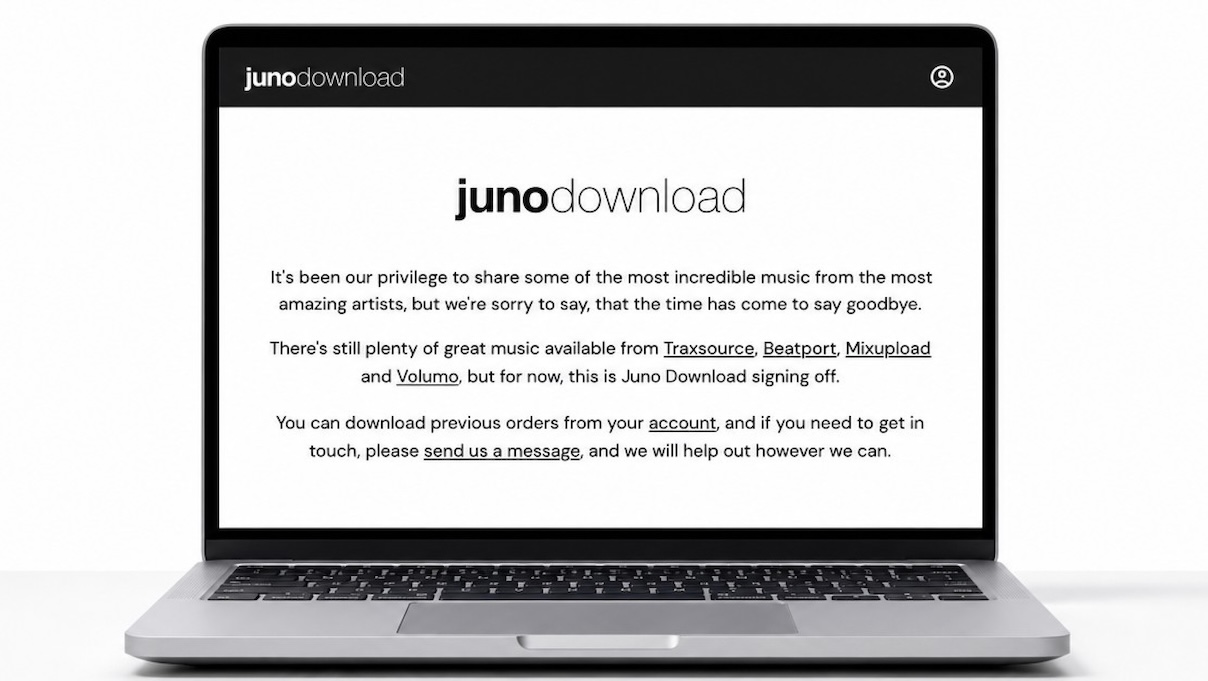
Juno Download, one of the original DJ-focused music download stores, has closed for good. On Monday 1 June 2026 the site stopped trading without warning, replacing its storefront with a short farewell message and pointing customers towards rival stores. There was no countdown, no closing-down sale, and no advance notice to the DJs who had been buying from it that morning.
The message on the homepage reads that it had been the company’s privilege to share music from some amazing artists, but that the time had come to say goodbye. It directs shoppers to Traxsource, Beatport, Mixupload and Volumo as places to buy music instead. The store’s Instagram and Facebook accounts were taken down at the same time.
Launched in 2006, Juno Download spent two decades as a go-to store for DJs and collectors buying high-quality files across house, techno, drum and bass, jungle, UK garage and dozens of other electronic genres. It built a reputation for DRM-free, DJ-friendly downloads in every major format, from MP3 to WAV, AIFF, FLAC and ALAC, and for a deep back catalogue that often held tracks the bigger stores didn’t.
The only on-record explanation for the closure came from Juno Download’s COO, Lucas Garcia, who pointed to the long shift away from buying music. He says it is a sad day, but that as streaming has become the dominant way people consume music, artists and labels are now more connected with their fans through social media and direct-to-fan services like Bandcamp, so the role of the music webstore is becoming less significant.
Sign up to our newsletter
 Free every Tuesday
 Your weekly digest of the latest training, gear reviews, industry news, and exclusive tips and tricks to help you stay ahead in your DJing.
We collect, use and protect your data in accordance with our Privacy Policy.
Who is affected, and what you can still do
The closure hits anyone who used Juno Download as their main store, and it hit them with no notice. People reported buying tracks the day before, and others were part-way through clearing baskets and wishlists when the site went dark. Those carts and wishlists are gone in their old form, though you can still see your last cart and last wishlist as a link once you log in to your account.
Your past purchases are not lost. You can still log in and re-download music you already bought, and support is still answering account queries. If older orders no longer show a download option, emailing Juno Download with the order number can get them re-enabled, which reportedly takes a couple of days. With the site clearly winding down, now is the time to pull everything you own and back it up locally rather than assume it will be there indefinitely.
The harder loss is the catalogue itself. A lot of Juno Download’s deeper material, particularly older and niche releases across genres like UK hardcore, hard trance, hard house and dancehall, never made it onto other platforms or onto vinyl. Some of it survives now only on the hard drives of the DJs who bought it while they could.
Has Juno Records disappeared too?
Juno Download is not the same company as Juno Records, the vinyl and DJ-gear retailer at juno.co.uk. The two split in 2013, when the download side was sold to a US company and has operated separately ever since. Juno Records is still trading as normal. The closure affects the digital download store only, so if you buy records or equipment from Juno, nothing there has changed.
So where should you buy your music now?
The natural home for most DJs is Beatport. It is the biggest dance music download store by some distance, and whatever you were buying on Juno, the odds are good that Beatport has it too. That scale is the main reason to start there: the newest releases, the widest label coverage, and the charts that promoters and labels actually watch all live on Beatport.
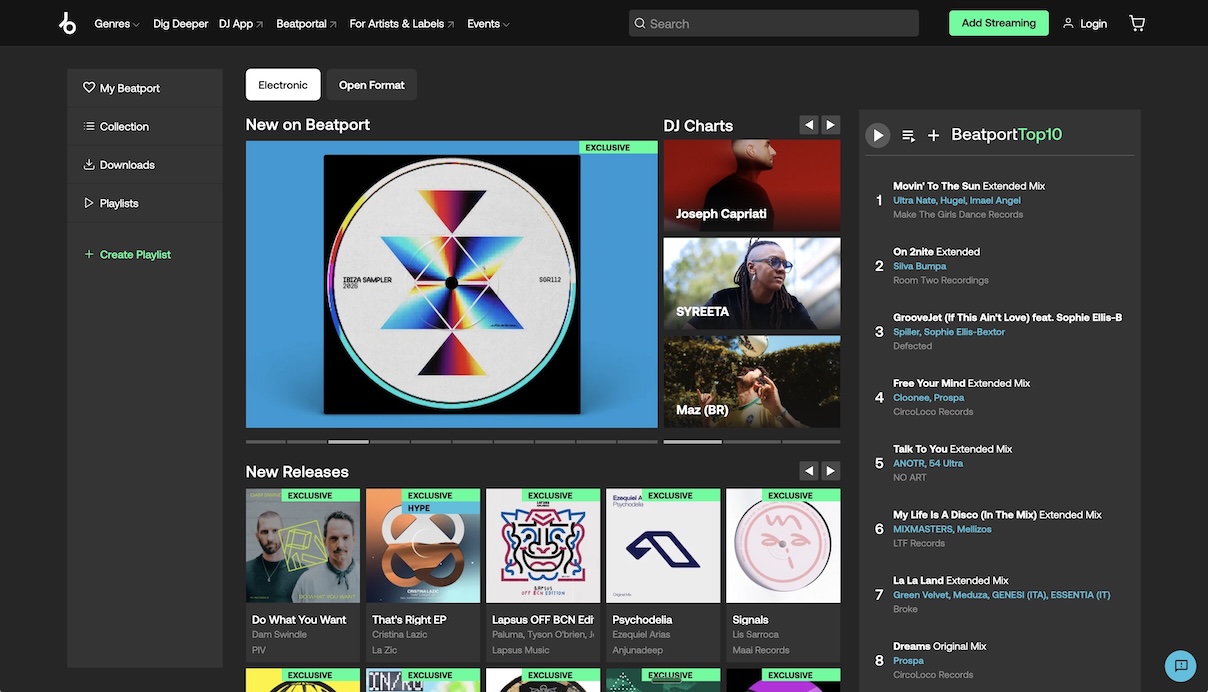
But while Juno wasn’t perfect, neither is Beatport: multiple Digital DJ Tips students tell us that site is slow, and the search is poor enough that they give up and use a normal search engine to find a track there rather than Beatport’s own search box. There are other irritations, too: prices that climb depending on the format you choose, VAT added at the checkout rather than shown upfront, and limits on how many times you can re-download what you’ve paid for. None of it is fatal, and you’ll get used to it, but expect an adjustment.
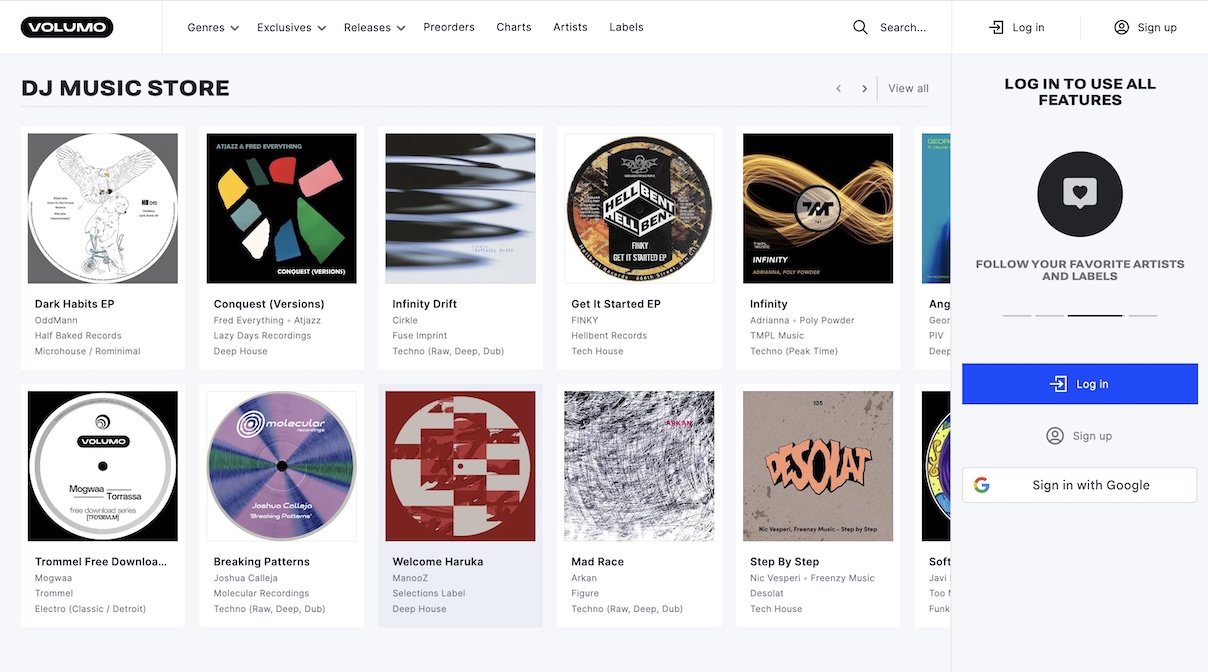
The more interesting name to come out of all this is Volumo. It’s a smaller, newer store that several DJs are now moving to as the closest thing in spirit to what Juno was: independent, and built for digging. At Volumo you buy a track first and then choose your format afterwards, with MP3, WAV, AIFF and FLAC all included at the same price and re-downloadable later at no extra charge, which is a direct answer to the Beatport format up-charge. The company also says it deliberately avoids a sales-based Top 100, on the grounds that it just makes popular tracks more popular, and leans on human-curated charts instead. It’s one to check out.
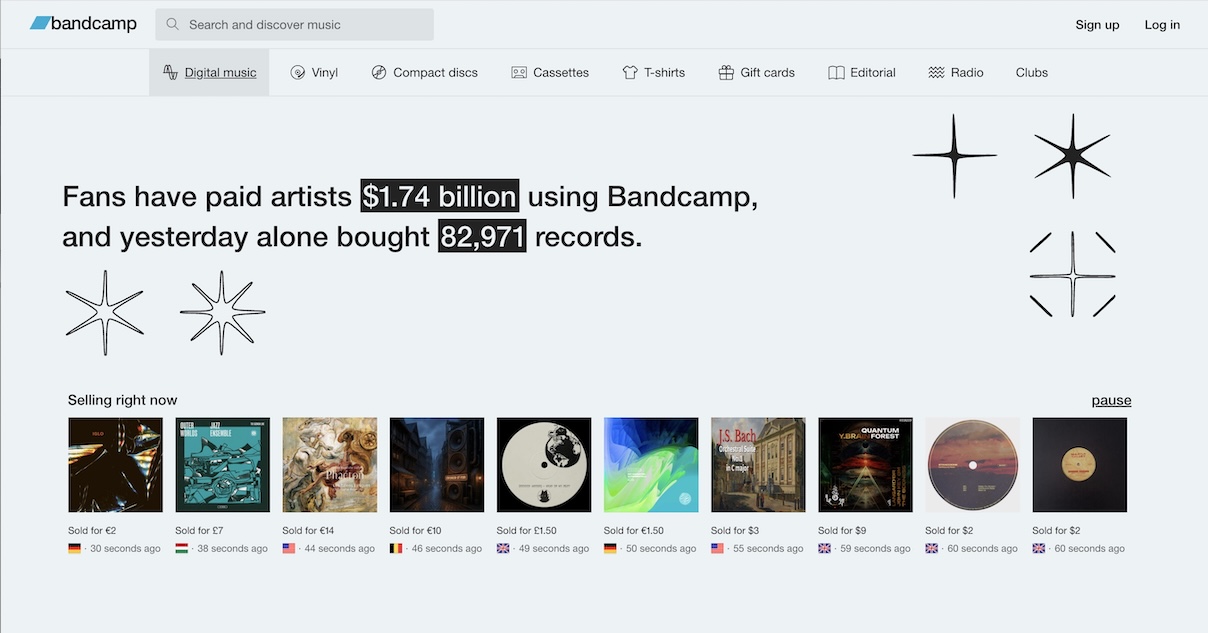
It’s also worth taking Juno’s parting comment seriously. The COO pointed out that artists and audiences are more connected now than they have ever been, through social media and direct-to-fan services. He meant it as a reason download stores matters less, but you can read it the other way: Bandcamp is built on exactly that connection.
Buying there often means buying straight from the artist or label, with more of your money reaching the people who made the track, and a closer link to the person whose music you’re playing out. The interface isn’t built for bulk-buying a week’s worth of tunes the way a dedicated DJ store is, so it won’t replace traditional download stores in your workflow. But as a way to get more immersed in the music you love and back the artists directly, Bandcamp would seem to be indicative of the broader direction things are going in.


