


The Lowdown
The CDJ-1500X is a compact media player that squeezes the 10.1-inch touchscreen from the flagship CDJ-3000X into a much smaller body, aimed at bars, small clubs and increasingly home users who want separates. At £1,469 it isn’t cheap, but it offers modern cloud connectivity, a stripped-back control layout and most of the features of the CDJ-3000X. Oh, and it takes requests via QR codes/software. Hmmm. but the short version is this: I think they’re going to sell bucket loads of these.
Don’t have our latest DJ gear guide? Click here to grab your free copy
Video Review
First Impressions / Setting up
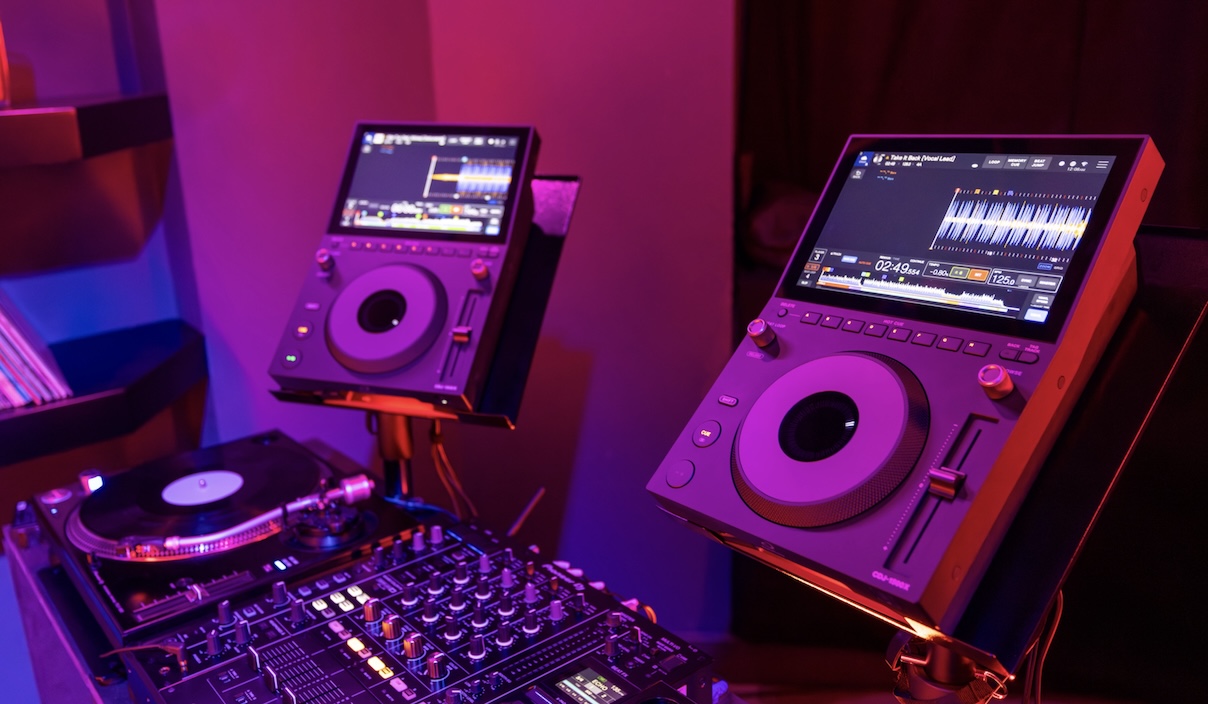
Pull one out of the box and the first thing that hits you is that screen. It’s the same 10.1-inch capacitive touchscreen as the far larger CDJ-3000X, and here it takes up almost the entire top surface of the unit. Next to something like the ageing XDJ-1000 MkII with its little 7-inch display, the 1500X looks like it’s arrived from a different decade. These are properly compact players, far smaller than the enormous CDJ-3000X, yet they don’t feel like they’ve been shrunk in the wash.
What’s radical for this brand is what they’ve thrown away. Gone are all the buttons for looping, memory cues and the rest. You get eight hot cues and a hot cue delete across the top, a single beat loop button, and a rotary endless push controller for browsing rather than the usual buttons. There’s a back and track search, a long tempo throw, cue, play/pause and shift, and that really is your lot for physical controls. I found it refreshing after years of increasingly cluttered fascias, though it does mean you have to be comfortable driving a lot of this player through the screen.
Set up is about as simple as it gets. Power comes in over USB-C from a supplied brick rather than a kettle lead, and I’ll admit I don’t mind that at all on a unit this size – we’re all used to it on laptops now. Round the back you get a computer USB-C connector, Pro DJ Link (up to four players via a hub), and analogue outputs. That’s it. I linked two units together in the studio in seconds so they could share waveform and track information. There’s no digital output, which some will grumble about, but I’m not convinced it’s a real issue on a player pitched at this end of the market.
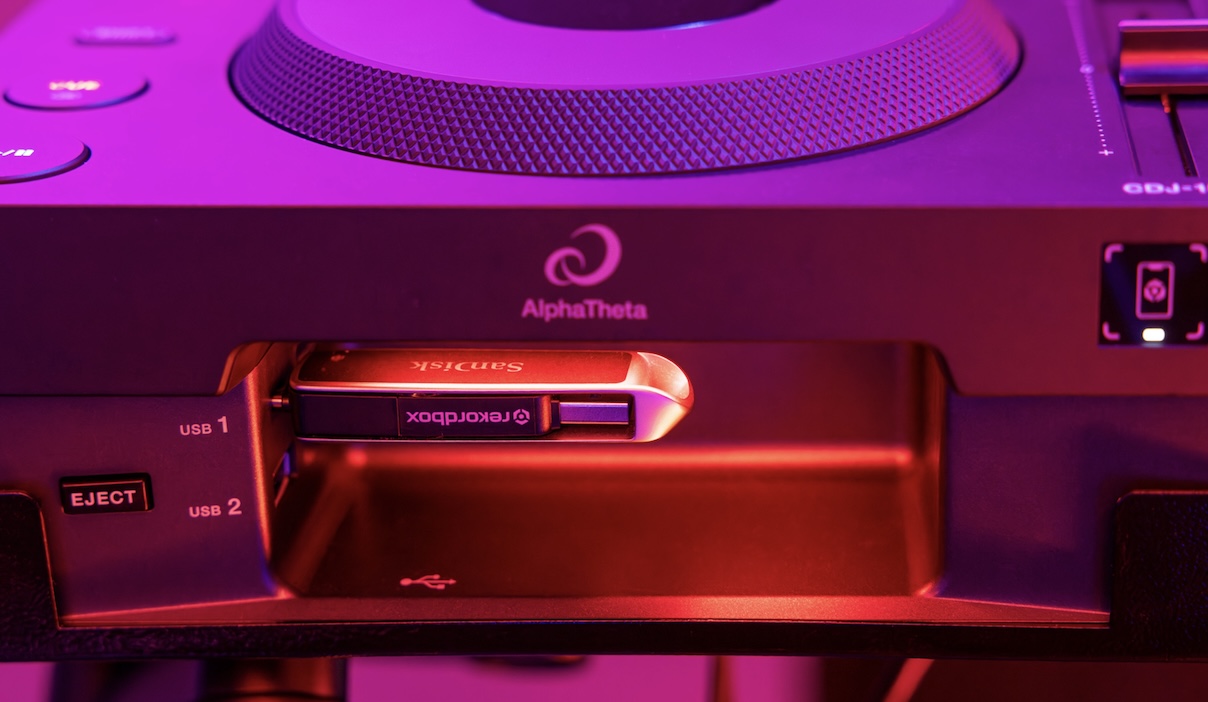
The nicest physical touch is on the front. The USB ports – one USB-C, one USB-A – live in an illuminated bay on the front panel, tucked out of the way so you can’t knock a drive out mid-set. Why nobody thought to put them there years ago I’ll never know. That bay light, and a second LED strip under the unit, can be set to any of 12 colours, so of course the first thing I did was set mine to Digital DJ Tips colours. I am that shallow, and it made me smile.
In Use
Most of the action happens on that big screen, and for the most part it’s been well thought through. The full track waveform runs across the bottom and now marks up vocal sections, BPM change points and different phrases of the track, so you can read a song’s structure at a glance. The browse screen shows up to 15 tracks at once with waveform previews, which makes finding your next tune quick.
Because the button count is so low, you do pretty much everything else by tapping the screen. Sync is a touchscreen button only. Tempo range adjust, gate cue, auto cue, quantize, touch and release for that vinyl feel, slip mode, memory cues – it’s all in there, accessed by tapping into the relevant panel on screen. There’s a shortcut screen that gathers a lot of the newer options in one place, including a light display mode for when you need to see a bit better. It’s tidy and modern, and once you’ve learned where things live it flows. But there’s no getting around it: if you don’t like using a touchscreen, this player will frustrate you.
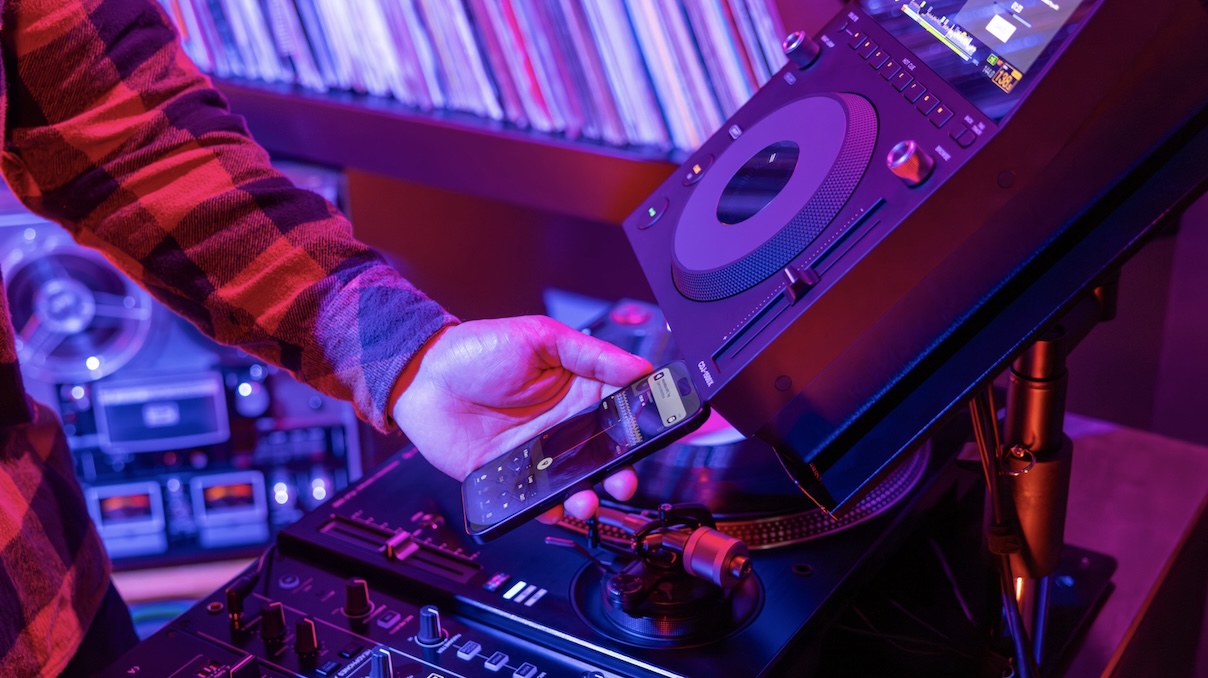
Connectivity is where the 1500X earns its keep. Built-in Wi-Fi means you can play straight from your rekordbox library in the cloud via CloudDirectPlay (good luck with that…), and from streaming services including Apple Music, Beatport Streaming and Tidal through StreamingDirectPlay. There’s also NFC on the front, so if you’ve got Rekordbox on your phone you can tap to log straight into your own settings and playlists. In practice that means you can turn up to a gig with nothing but your phone and start playing from your own library, which is a step forward for the bold.
These players also have onboard track analysis, which they need in order to make sense of streaming material on the fly, with settings for dynamic or normal analysis depending on your music. I’ve not had the time to test that properly yet, but it’s a sensible addition. They’ll connect over that rear USB-C to Rekordbox on a laptop, and to Serato DJ Pro with the relevant licence.
Now the omission I flagged at the top. There is no key sync and no key shift on this player. On a unit that costs the best part of £1,500, that’s a major miss. Harmonic mixing is bread and butter for a huge number of DJs now, and to leave the tools for it off a modern player at this price is hard to justify. If you specifically want key shifting you can get it through DJ software using these as a controller, but that’s rather an expensive way of getting it. It’s a silly omission for me, and the one thing that stops these being close to perfect.
A few smaller gripes. The main waveform isn’t as smooth as I’d like – there’s a touch more jitter in the scroll than there should be, and it doesn’t scroll as cleanly as the equivalent Engine DJ gear. The jog wheel is a mid-size unit with a rotation indicator and a non-slip surface, but the display in the middle only tells you how far through the track you are and whether the platter is turning, so there’s less information there than on pricier players.
Sign up to our newsletter
 Free every Tuesday
 Your weekly digest of the latest training, gear reviews, industry news, and exclusive tips and tricks to help you stay ahead in your DJing.
We collect, use and protect your data in accordance with our Privacy Policy.
Also, the hotcue buttons only light in a single colour. You can save both hot cues and loops to them, but a saved hot cue shows green on screen while a loop shows orange, and the buttons themselves are all the same colour regardless. I’d have liked the buttons to match the on-screen colours so you know at a glance whether you’re jumping to a cue or a loop.
Build and feel in use are otherwise hard to fault. The matte black finish looks smart and disappears into a booth, and there are screw holes on the sides for optional custom panels if you want to dress your CDJs up. I paired mine with Allen and Heath’s Zone 24C mixer, which looks lovely alongside them, and they’d sit just as happily next to a DJM-V5. Worth noting too that the 1500X is the first AlphaTheta player compatible with the new CoBeat audience-request service, which lets the crowd vote for and request tracks from a list you’ve prepared – we’ll cover that properly in separate coverage if enough of our students ask us to.
Conclusion
There was a gap in the range for exactly this, and the CDJ-1500X fills it well. It’s thoroughly modern, compact without feeling cut down, and it carries nearly everything you’d want from a separate player, wrapped around that superb big screen. My read is that the XDJ standalone separates line is now effectively dead and these replace both the XDJ-1000 MkII and the XDJ-700, folding them into the CDJ badge. For the money you’re getting cloud and streaming connectivity, NFC login, onboard analysis and a clean control layout, and I came away liking these a lot.
They’re not for everyone. If you refuse to DJ from a touchscreen, or if key sync and key shift are central to how you mix, look elsewhere – the lack of key tools is the single biggest reason to pause before buying. Worth weighing up against the flagship CDJ-3000X if you’ve the money and the space and want the full button array, or the Denon DJ SC6000 if a smoother waveform and a built-in screen matter more to you (and if you can still find them – they appear to be discontinued). Budget-minded DJs after separates might look at the older, cheaper players while they’re still around.
But for general DJs who want separates at home, and for smaller venues that don’t want to commit to the physically and financially much larger gear, these are a very easy recommendation. Overall they’re a fitting, modern replacement for some very old players, held back from near-perfection only by the baffling lack of key sync at this price.
