


The Lowdown
The Mackie ProFX10 GO is a battery-powered 10-channel analogue mixer offering eight hours of cordless operation. Perfect for mobile DJs as an expansion mixer between their DJ controller/setup and the PA system, it adds microphone channels, Bluetooth streaming, USB recording, built-in mic effects, and professional Onyx preamps. It’s genuinely portable while maintaining professional build quality.
Don’t have our latest DJ gear guide? Click here to grab your free copy
Video Review
First Impressions / Setting up
Out of the box, the ProFX10 GO immediately feels like quality gear. Mackie’s “built like a tank” reputation is intact here, with the solid steel chassis and tough ABS side protection giving confidence it’ll survive the usual knocks and scrapes. The pleasing wedge shape angles the controls toward you nicely, making everything easy to see and reach during a gig.
The layout is refreshingly standard – no learning curve if you’ve used any analogue mixer before. Everything’s where you’d expect it to be. The rear panel is minimalist and uncluttered, featuring just the power input, USB-C output, and power switch. This simplicity is a blessing when you’re setting up in tight DJ booths or cramped mobile set-ups.
Channel configuration makes perfect sense for DJs using this as an expansion mixer: four mono channels with XLR/instrument inputs handle all your microphone needs (with Hi-Z switching on channels 1-2 for acoustic performances – overkill, to be honest), plus three stereo channels. You’ll typically run your DJ controller’s master output into one stereo channel, leaving the others free for additional sources like a backup device or guest DJ set-up.
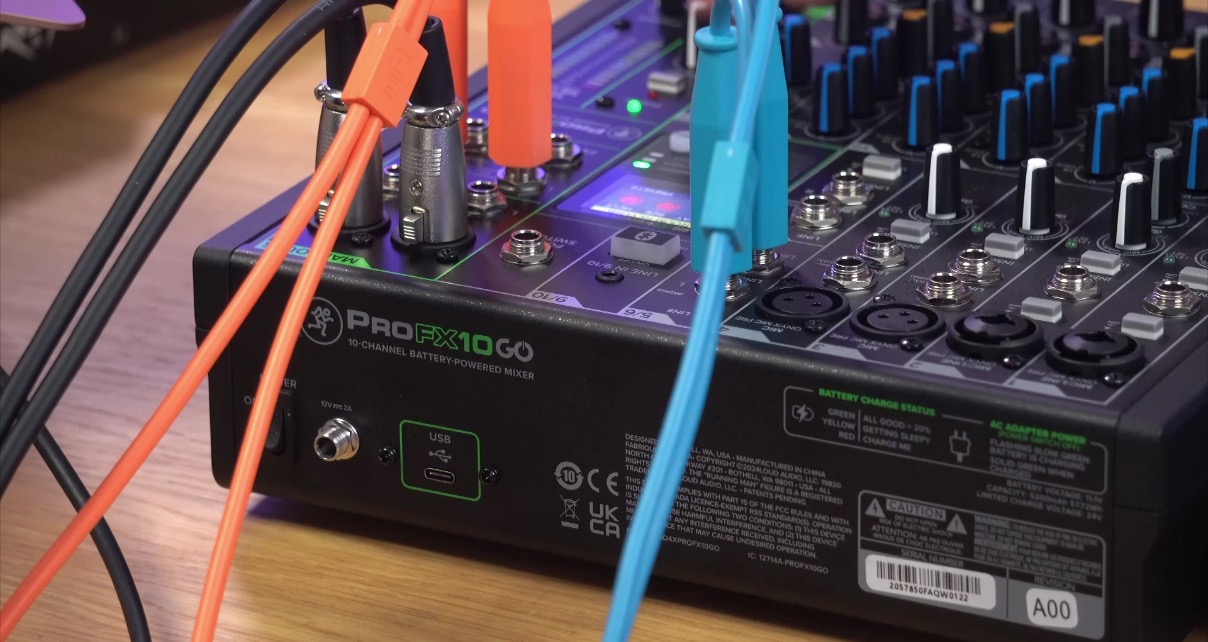
Two features immediately catch the eye: the built-in effects engine with its color LCD display (small but clear), and the nice big main meters. Those meters are properly visible – none of that squinting at tiny LEDs you get on budget mixers. They’re accurate and responsive, giving you confidence in your overall system levels.
The multiple output options are well thought out – XLR and 1/4″ mains to feed the PA, control room outs for booth monitors, and a dedicated headphone jack if needed. This gives you proper signal routing flexibility, whether you’re in a professional venue or setting up your own mobile rig.
How I used it
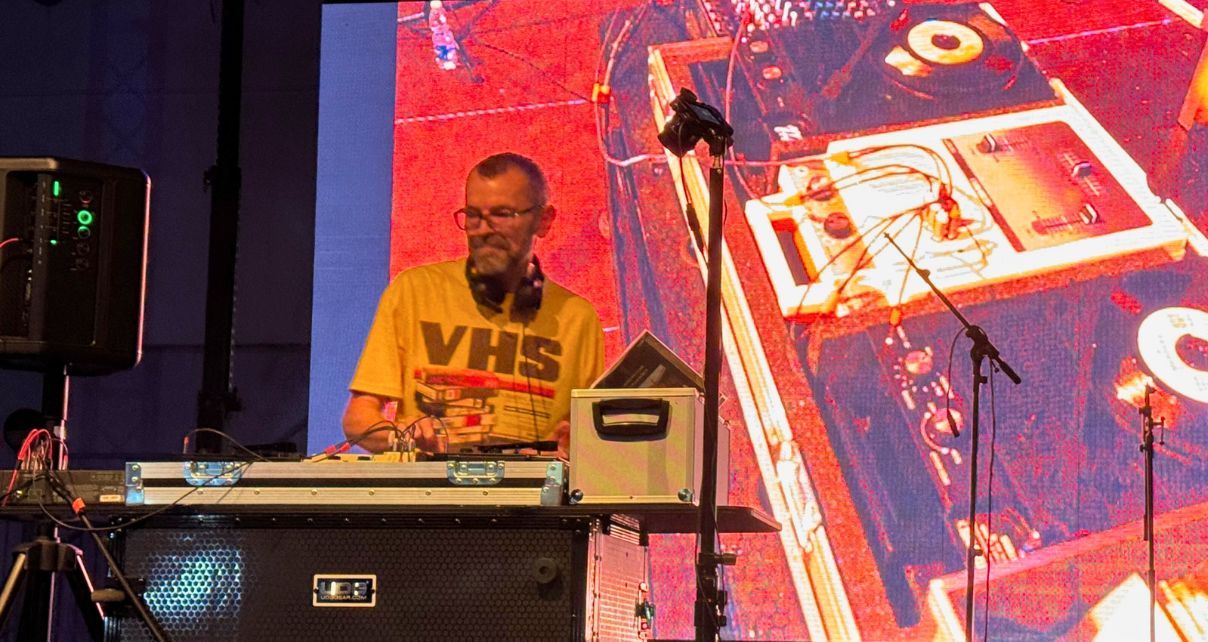
I typically use this kind of mixer to add functionality or to tweak the audio after it’s left my main mixer, and that’s exactly how I tested it. I was playing a DJ set on the main stage at a festival after the bands had finished, to close the gig. We needed to get my gear on stage quickly, and I was actually DJing on a very simple set-up with a mixer that simply had a single output – not even any EQs on it! (It’s a long story.)
DJ like a pro using ANY gear: The Complete DJ Course
This mixer was a godsend. I could plug my DJ gear output directly into one of the stereo channels, which instantly gave me an overall EQ and a proper output meter so I could send nice, clear but not overpowered audio to the sound engineer. It also gave me a microphone channel which I could compress and add effects to, so I sounded clear and professional on the mic.
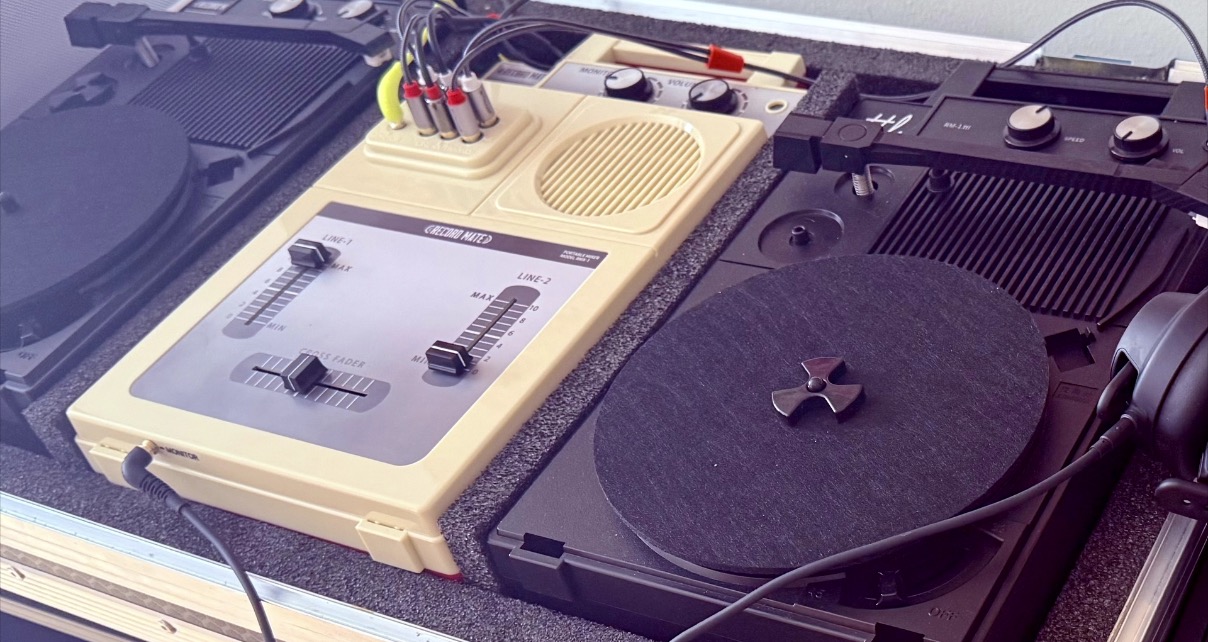
Crucially in this case, it gave me those professional XLR outputs for front of house, but also a TRS control room feed which I used as a booth output, with its own volume control. This meant I had complete control over my foldback monitor on stage – I didn’t want the in-house monitoring that had been provided, mainly because I like to turn my monitor up and down throughout a DJ set (but also as they were causing my turntables to instantly feed back).
Most remarkably, my whole rig was battery powered. I was using portable turntables and a battery-powered DJ mixer, so having a live mixer that also didn’t need outlet power meant we could just quickly carry my gear onto the stage, plonk it down in the middle, and I could start playing immediately. No hunting for power outlets, no running cables – just pure plug-and-play convenience when time was of the essence.
Sign up to Tuesday Tips
 Free newsletter
 Your weekly digest of the latest training, gear reviews, industry news, and exclusive tips and tricks to help you stay ahead in your DJing.
We collect, use and protect your data in accordance with our Privacy Policy.
In Use
I was actually under-using the mixer, which is typically how it is when DJs use mixers like this to add extra functionality. Live mixers are nearly always skewed towards plugging a whole band into them – that’s why they have several mono channels for microphones and instruments. In this case, there’s also phantom power for condenser microphones, built-in effects for those microphones, and so on. Apart from a single mic input, I didn’t use any of that.
However, what I did use worked perfectly. As I was playing a DJ set with old seven-inch vinyl, some of it was very worn and dull sounding. Having a professional EQ to add some sizzle to the treble meant I could play a more professional DJ set. Also, being able to roll off the bass a little when the connections caused the turntables to feed back was a godsend.
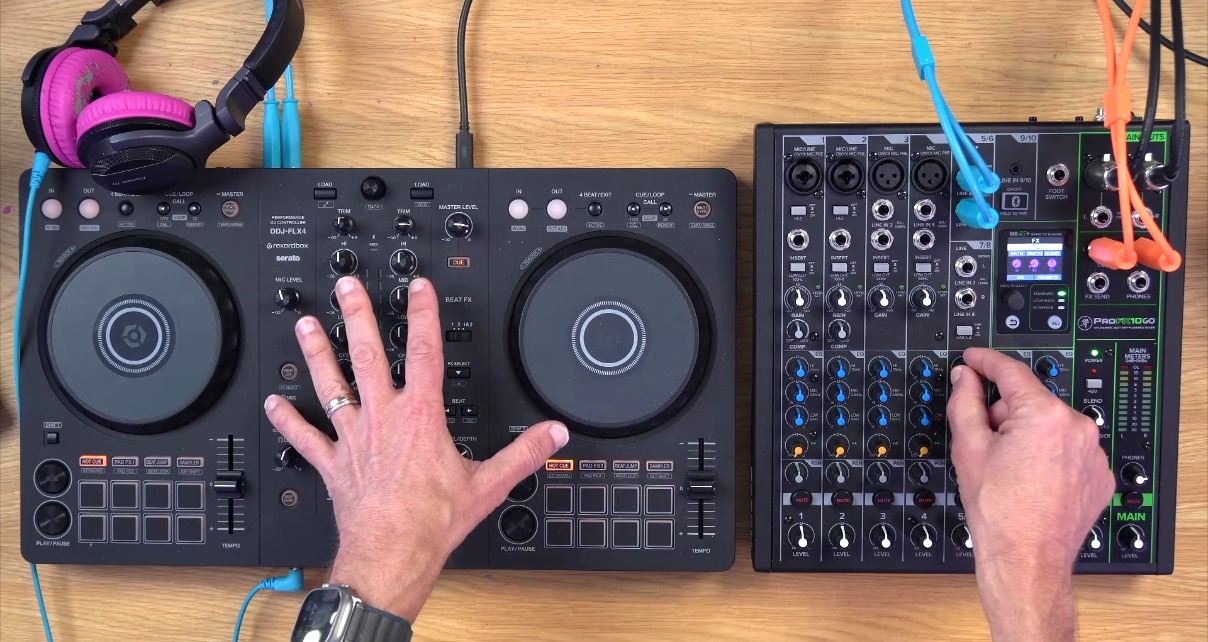
Frankly, if you’re working in any professional environment, sound engineers will expect balanced XLR outputs. If for whatever reason your DJ gear can’t offer them – you’re using a cheaper controller, you’re using something boutique and retro like I was, whatever – something like this is important to be able to provide.
Read this next: What Makes A DJ Mixer Different From A Normal Mixer?
There are other features which would be useful to DJs that I didn’t use but could see myself using. For instance, because of the built-in audio interface and USB connectivity, you can both feed audio into it from a laptop or even a phone, but also you can take audio from it in order to record. This means it could be easily used as a podcast mixer, for live streaming a DJ set, or for feeding in a backup source should your main system go down for whatever reason.
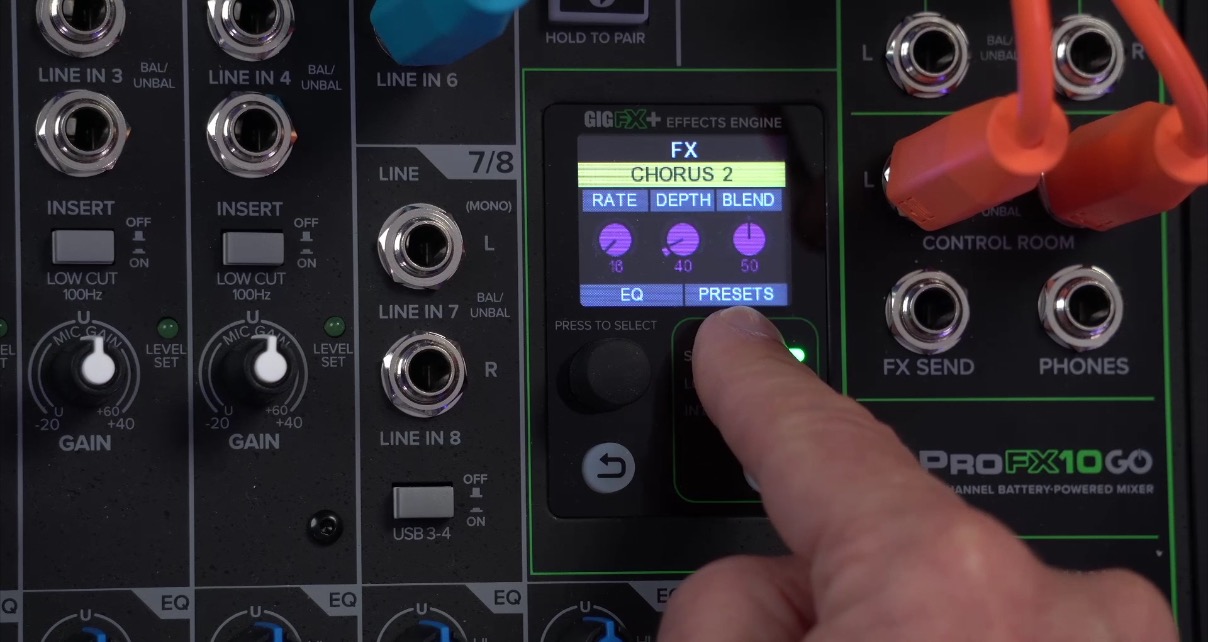
There’s also a Bluetooth pairing feature which pleasingly is two-way, so you could in theory not only have a backup source on Bluetooth, but I guess livestream without a wire from the mixer to say a phone that was handling that side of things – although I didn’t test that. I did have a small play with the effects, but this is something a DJ probably wouldn’t use as of course most of our gear has effects built in anyway – although to add a little bit of reverb to the microphone, it’s nice.
This is a somewhat specialised mixer in that it’s battery powered, and there are very few battery-powered live mixers out there. So it’s going to live and die partly on how good that battery is.
I tested it thoroughly before taking it on stage and I got a day’s worth of use out of it on and off, which aligns with the eight hours claimed by Mackie for the battery life. However, a battery life indicator would have been far better, as it only tells you when it’s running flat towards the end. The battery is user-replaceable and swappable, so if it’s an issue for you, you can get another one – but worth pointing this out.
Conclusion
If I was under-using the mixer, then again it’s worth pointing out that should you need a mixer to do more complex things, you might find it limiting. You can only record the full stereo mix from the USB with no multi-track recording, and the effects are global as well, with limited parameters. As I said, they’re not something DJs would really use anyway, so they’re not a big concern if you’re putting together a more traditional set-up.
And while I’ve already pointed this out, don’t think that you can push this into service as a DJ mixer proper, because it has no pre-fade listen at all on the channels. So it’s strictly for use as a live mixer, post-DJ gear.
Finally, I’d like to see a smaller version of it. I do think there’s a gap in the market for a smaller battery-powered mixer that just lets DJs add a microphone, have the USB interface, have Bluetooth, and a couple of useful stereo channels plus the two independent outputs – without the size and weight of this unit. Maybe they’ll release a ProFX6 GO, which I think would hit that sweet spot.
All that said, for now this is fulfilling a useful role in my set-up, and for portability and flexibility – especially when it comes to power – it currently stands pretty much alone.

