While DJ technology evolves constantly, the fundamental principles of great DJing remain unchanged. These are the same principles we’ve taught for 15 years, the ones we put in our book, and the foundation of every course we create. But don’t just take our word for it.
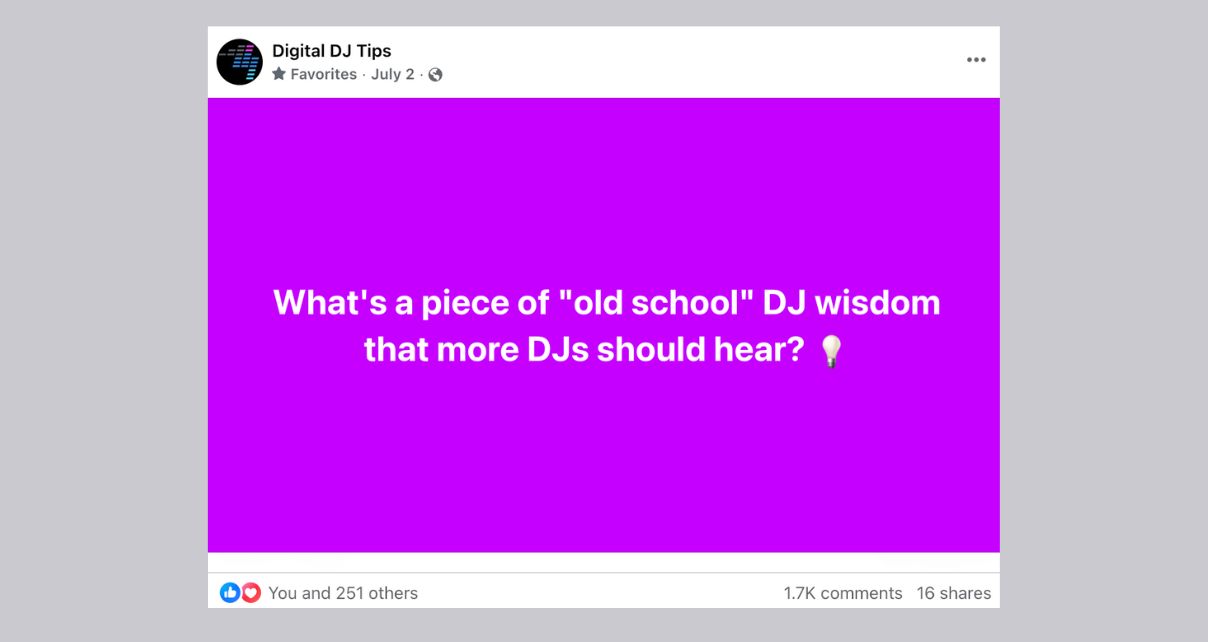
We recently asked our Facebook community a simple question: “What’s the most important piece of old-school DJ advice that younger DJs need to hear?” The response was overwhelming – over 1,000 comments from DJs across generations, experience levels, and musical styles. And we’re proud to say their wisdom perfectly reflects what we’ve always known to be true.
After 15 years of teaching DJing fundamentals, we’ve built a community of knowledgeable, experienced DJs who understand what really matters. Their responses weren’t nostalgia or gatekeeping – they were a masterclass in the timeless principles that separate good DJs from great ones, regardless of the equipment they use or the era they learnt in.
If you’re an experienced DJ reading this, you’ll recognise these principles as the bedrock of everything you do. The techniques you mastered years ago aren’t obsolete – they’re more relevant than ever. In an age where technology can handle the technical aspects, your understanding of these fundamentals is what sets you apart.
If you’re newer to DJing, this isn’t about limiting your creativity or forcing you to buy expensive gear you can’t afford. It’s about recognising that all the controllers, software, and effects in the world are just tools. The real magic happens when you understand the foundational principles that make those tools actually work. As one DJ puts it: “Nobody cares about mixing in key if you don’t know how to read a crowd.” So, here’s what over 1,000 DJs tell us matters the most to them…
Crowd management & service – it’s their party, not yours

The most frequently mentioned advice (appearing in over 100 responses), is some variation of “read the crowd” and “play for them, not yourself”.
“Play for the crowd not for yourself,” writes Matt Bagwell. “The customers clearly love the music so always make them happy,” adds Monty Bullock. Dan Stra puts it even more directly: “It’s about the client, then it’s about the guests, then it’s about us. Actually, it should NEVER be about us.”
This extends beyond just song selection. Anthony Groves offers tactical advice for club DJs: “When in a bar setting learn to rotate your dancefloor, a packed dancefloor all night is easy but the bar isn’t making money. Thirsty people drink water, happy people drink alcohol.”
Read this next: How Pro DJs “Pre-Read” Their Crowds
The crowd management wisdom includes understanding demographics and timing. Gabriel Kenyatta notes: “For Wedding and Event DJs, learn how to Read the Room. Unlike at a Bar, special event demographics can differ vastly at EVERY event.”
Multiple DJs emphasise the “ladies first” principle. As Master Chris Snow explains: “Cater for the Girls and the men will follow.” This isn’t outdated thinking, even though it can sound a bit like like that – it’s practical crowd psychology that still works!
Big takeaway: Your technical skills mean nothing if you can’t connect with the people in front of you. Every mix, every song choice, every transition should serve the experience you’re creating for your audience.
Sign up to our newsletter
 Free every Tuesday
Your weekly digest of the latest training, gear reviews, industry news, and exclusive tips and tricks to help you stay ahead in your DJing.
We collect, use and protect your data in accordance with our Privacy Policy.
Technical skills & fundamentals – master your craft

While technology has transformed how we DJ, the core technical skills remain as important as ever. The overwhelming message from experienced DJs is clear: learn to mix manually before relying on automated features.
“Learn to beat match by ear,” urge multiple respondents. “Mix with your ears not your eyes,” adds Darren Kidd. The reasoning isn’t about rejecting technology – it’s about understanding what’s actually happening when you mix. As Jeffrey Thomas suggests: “Mix like the sync button doesn’t exist.”
The “use your ears” principle extends beyond beatmatching. James Olsen simply writes: “Stop looking at the waveform/computer,” while Six Love adds: “Stop staring at your laptop and read the crowd.”
Several DJs emphasise that vinyl and turntables aren’t required, but the skills they teach are essential. We completely agree with this. The key insight is that learning without aids – whether on vinyl, CDJs, or even a basic controller with the screen turned away from you – forces you to develop your ear and understand the music in ways that visual aids can’t teach.
Want unlimited DJ training for life? Click here to join Access All Areas
Mark Redshaw explains: “Learn how to identify when something harmonises by ear and learn basic music theory. A bad ill timed key clash can kill a dance floor and a vibe.”
On the mixing side, proper level management is frequently mentioned. Kelly M Klawes writes: “Stay out of the red on your mixer… Staying out of the red means the compression and limiters do not have to work hard and your mix will actually sound louder.”
Big takeaway: Technology should enhance your skills, not replace them. When you understand the fundamentals, you can make any equipment work. When you rely solely on automation, you’re only as good as your tools.
Music knowledge & selection – know your arsenal
Multiple DJs emphasise that song selection trumps technical skills every time. “DJing is 95% the art of picking the next song,” declares Lydell Gorski. Sandy McCosh agrees: “Song choice is the most important element of DJing. All the rest is built around that single fact.”
But knowing what to play requires truly knowing your music. As Brian Graham advises: “Know music! Learn all decades, all genres, and not just what you listened to in your lifetime.” This knowledge allows you to make connections that automated systems can’t.
Jay Sawh emphasises authenticity in selection: “Know your music. Don’t jump around based on what you feel is trending. You can hear that.” The goal isn’t to chase every trend, but to develop an understanding of what works and why.
Read this next: How DJs Always Know What Song To Play Next (Without Ever Panicking)
Several DJs stress the importance of letting music breathe. “Let the music play,” write multiple respondents. As Anthony Moreno puts it: “A real DJ will play music you didn’t know you needed to hear.”
The preparation aspect is crucial. Romando King advises: “I believe that doing as much preparation as possible before the event. Create your playlists and do a lot of practicing.” But Charles Acquisto warns against over-planning: “If you have a two hour set, be ready to play 6-10 hours… A pre-programmed set won’t give you the freedom you need to cater to the crowd.”
Quality matters too. Randy Locrotondo is blunt: “Stop ripping from inferior sources. Your tracks sound like shit. Buy quality tracks.”
Big takeaway: DJs who know their music can adapt to any situation. Those who rely on playlists and trending charts will always be limited by their preparation.
Professional mindset & philosophy – respect the craft
The most consistent theme across all responses is the importance of humility and respect – for the music, the audience, and the craft itself. “Stay humble” appears in dozens of responses.
This humility extends to recognising your role in the larger musical ecosystem. Greg Churchill puts it simply: “Nobody cares about the DJ but the DJ. Just play good music.” Lyndon Lennon agrees: “No one cares about DJ mixing. If everyone is having a good time, the DJ doesn’t matter.”
The philosophy of service over ego comes through repeatedly. “It’s not about you” appears in various forms throughout the responses. Bert Ros writes: “You are there to provide the music, nothing more but also nothing less.”
Read this next: How To Behave In Public As a DJ – Your Secret Weapon For More Gigs
Several DJs emphasise continuous learning. Kevin Brady advises: “Be friendly, stay humble, no gatekeeping, keep digging for the freshest music out there, learn about the history and respect those that came before you.”
The respect for craft also includes respect for other DJs. Andrew Mirelez urges: “Support other DJs and stop hating.” Bobby Alirezai adds: “Be respectful and learn about proper DJ Etiquette towards your fellow DJs!”
Big takeaway: This professional mindset isn’t about suppressing creativity or personality – it’s about understanding that DJing is ultimately a service industry where your success depends on making others happy through music.
Business & professionalism – treat it like work
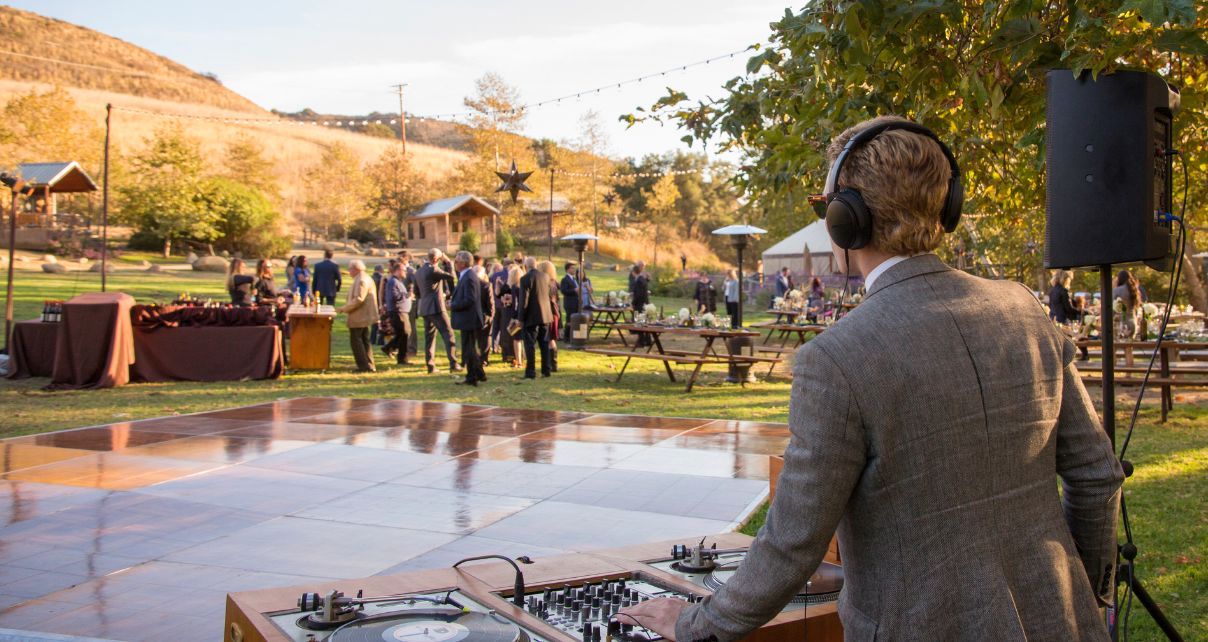
The experienced DJs in our community offer practical business advice that goes far beyond the music. “Show up on time!” writes Greg Jackson – simple advice that multiple DJs feel needs emphasising.
Financial wisdom is frequently shared. “Get your money up front,” advise Joe Sullivan and Dana Robinson. Randy Caldwell is more detailed: “Know your worth and don’t settle for what they say they will pay you.”
Preparation extends beyond music. Christopher Kind shares: “Be like a Boy Scout and be prepared. Expect the unexpected at any gig… Extra cables, adapters, etc even if it’s something the venue or event should have.” RL Young adds: “Always do a dry run to the site where you’ll play to check out the set up area.”
Sign up to our newsletter
Free every Tuesday
Your weekly digest of the latest training, gear reviews, industry news, and exclusive tips and tricks to help you stay ahead in your DJing.
We collect, use and protect your data in accordance with our Privacy Policy.
Professional presentation matters. Johnny Mercer advises: “Do not DJ in the clothes you loaded in or out. Have some professional sense of yourself… dress just one level above the gig I’m playing.”
Health and longevity come up frequently. Bob Teagarden shares crucial advice: “Learn to mix gigs with hearing protection in. After nearly 40 years my hearing is still very good.” Stuart Luther warns: “Don’t put the speakers behind you… [DJs who do this are] putting themselves at risk of hearing loss and tinnitus.”
Several DJs emphasise not underselling the industry. Akshun Love is passionate about DJs charging properly for their services rather than accepting low rates out of fear.
Big takeaway: Treating DJing professionally – whether as a hobby or career – leads to better outcomes for everyone involved.
Er, vinyl what?
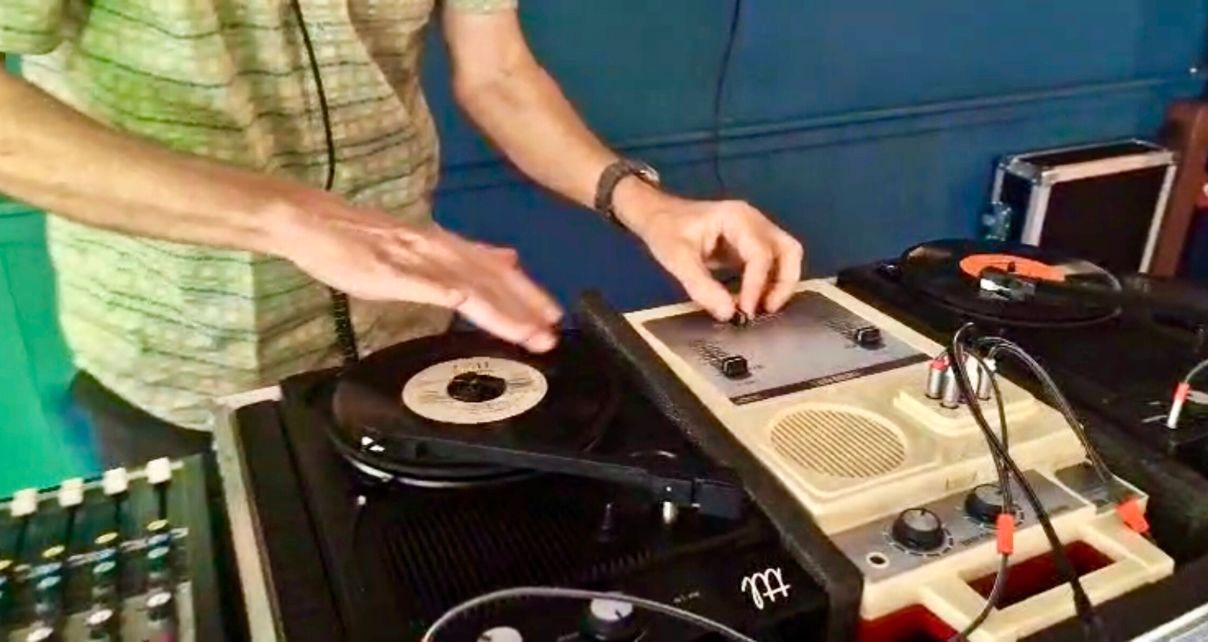
Throughout these responses, we noticed an interesting pattern around technology. While there was definitely some “vinyl vs. digital” debate, the most thoughtful responses focused on principles rather than equipment.
Tony Ruiz sums it up well: “Nobody cares if you’re using sync, using a laptop, using flagship gear, using a $200 Numark controller, or brand new Pioneer CDJ-3000s. They care if you’re playing a clean set and reading the crowd well.”
Read this next: My First DJ Gig On Vinyl In 22 Years – What I Learned
The key insight from experienced DJs isn’t about rejecting technology, but about understanding what technology can and can’t do for you. Learning to mix manually – whether on vinyl, CDJs, or a basic controller – teaches you skills that automated features can’t. But once you have those skills, using technology to enhance your performance is perfectly valid.
Kenni Vexed puts it perfectly: “Use whatever format and gear you have and enjoy it… don’t worry about negative feedback because 90% of it is snobbery from people who are supposed to be your peers… here you are with a room full of people dancing and having a good time.”
Building your foundation
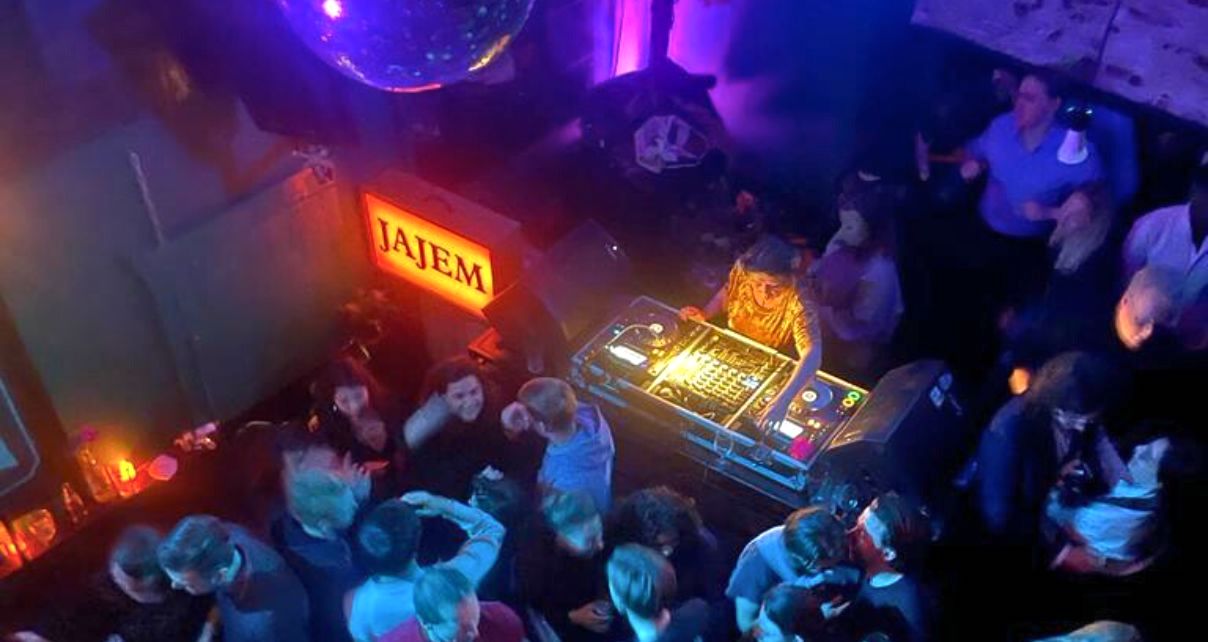
Our community’s 1,000+ responses confirm exactly what we’ve always taught: the fundamental principles of DJing work together to create the “complete DJ”. These fundamentals – crowd reading, technical skill, music knowledge, professional mindset, and business sense – aren’t separate skills that you learn in isolation.
You can have the most expensive gear and the latest software, but without these foundations, you’re just playing music. When you understand these principles, you can create experiences that people remember long after the night is over.
As Leonidas Papakosmas, a DJ with nearly 20 years of wedding experience, puts it: “Know your music. Go prepared – for the best and the worst. Don’t play for your ego – play for the people in front of you… And above all – be humble. You’re not a rockstar. You’re just another guy doing a job.”
Finally…
Timeless principles such as these form the foundation of everything we teach at Digital DJ Tips. All of our courses start with these fundamentals and then build on them to give you all the skills you need to succeed as a DJ in today’s world. Our Access All Areas package makes you a lifetime member, so we can be with you every step of your journey – from mastering the basics to developing your unique style and building a successful DJ career.