


With not much changing in DJ hardware throughout 2025, some of the biggest developments in DJ tech last year were in software. (That’s started to change with NAMM in early 2026, but that’s another story…) In this roundup, we look at the state of play with the big names, and examine some of the trends that drove DJ software forward.
Algoriddim’s Djay Pro and VirtualDJ continued to lead the way with new features, while the others added expected functionality or made minor tweaks – often leaving shortcomings unfixed. In many cases, improvements were driven by outside companies like Apple and Spotify rather than the developers themselves.
Here’s where things stood as we closed out 2025, and who’s positioned to lead in 2026.
Watch the show
Prefer me to talk you through this? In this late 2025 video, I give my year-end report card on DJ software innovations – the good, the bad, and the surprising. These developments set the stage for who’s leading the way in 2026, which we explore throughout this article. It’s a live recording, so we also take questions from our community on the subject.
Platform-by-Platform
Below, we break down how each major DJ software platform performed in 2025 – examining what changed, what worked, and what fell short. We’ve tested all of these platforms extensively in our teaching and training, so here’s our honest assessment of where each one stood at year’s end, and what it means for who’s leading the way in 2026.
✅ Why you can trust Digital DJ Tips
We’re a DJ school, NOT a shopping website. We review DJ products and services simply to help our students (and would-be students) to make wise choices. We do NOT feature affiliate links and are NOT funded by any of these companies. All products and services we review are also featured in our lessons and training. We stand by our recommendations and will always answer questions in the comments to help you.
Djay Pro: The one to watch
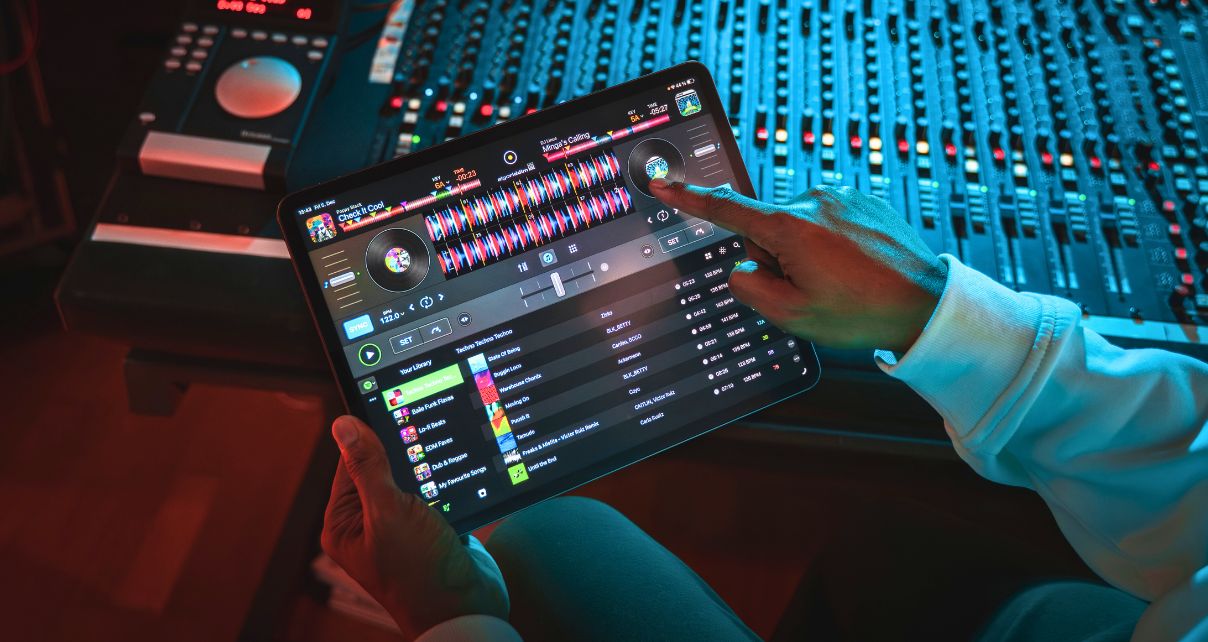
Algoriddim keeps showing the others how it’s done. Version 5.6 brought expanded hardware support, with native compatibility for the Rane Seventy-Two, Rane One & Rane One MkII, Allen & Heath Xone:24C and AlphaTheta CDJ-3000X. For years, Djay’s biggest weakness has been hardware integration, and this update sorted much of that out.
Spotify integration arrived in September for desktop and December for mobile. Since Djay was Spotify’s original DJ software partner before the 2020 cutoff, this feels like things coming full circle.
October’s OneLibrary integration (see below) was clever too. Your Djay libraries now export to USB for use on CDJ-3000X, CDJ-3000 and Opus-Quad, with changes syncing back automatically.
Version 5.4 (mid-2025) added the ability to import playlists, cue points and loops from Rekordbox, Serato and Traktor directly. This is significant for anyone who’s been thinking about switching but worried about losing years of library work. The same update brought full DDJ-FLX10 integration with complete on-jog screen support and Neural Mix controllable via the Active Stem button.
VirtualDJ: AI everywhere, all at once
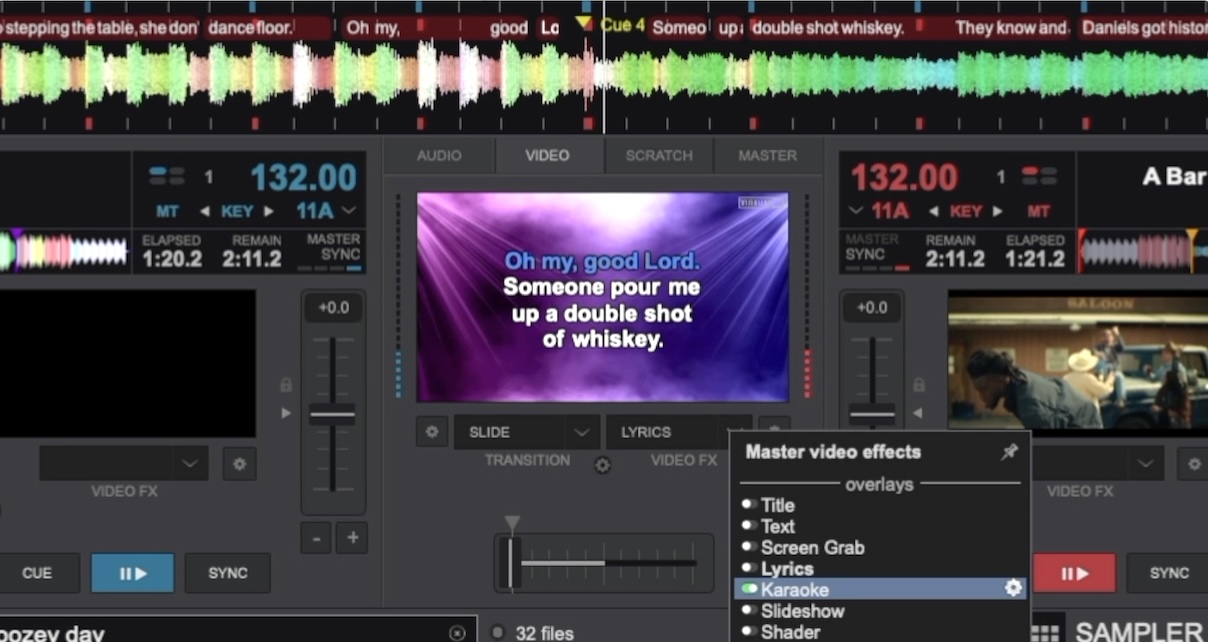
VirtualDJ had an interesting year, though all the action happened right at the end. December brought AI Lyrics and Karaoke, which extracts lyrics from any audio file using AI and displays them on the waveform. The automatic karaoke feature works without needing specialised karaoke tracks – a proper upgrade for karaoke DJs who’ve been stuck paying for specialist services.
The same update added the AI Prompt Folder, a built-in AI assistant that responds to queries like “build me a 90s hip-hop set”. Forum reactions were positive, with people saying it’ll be handy for gigs outside your comfort zone.
Get the skills to rock ANY gig: The Complete DJ Course
December also brought a complete effects overhaul, adding 122+ professional effects including FX from Pioneer DJ and Rane hardware mixers. This addresses the long-running complaint that VirtualDJ’s effects weren’t up to scratch – although despite the new effects having familiar names, we’ve heard mixed things about their overall quality.
Serato: Playing catch-up
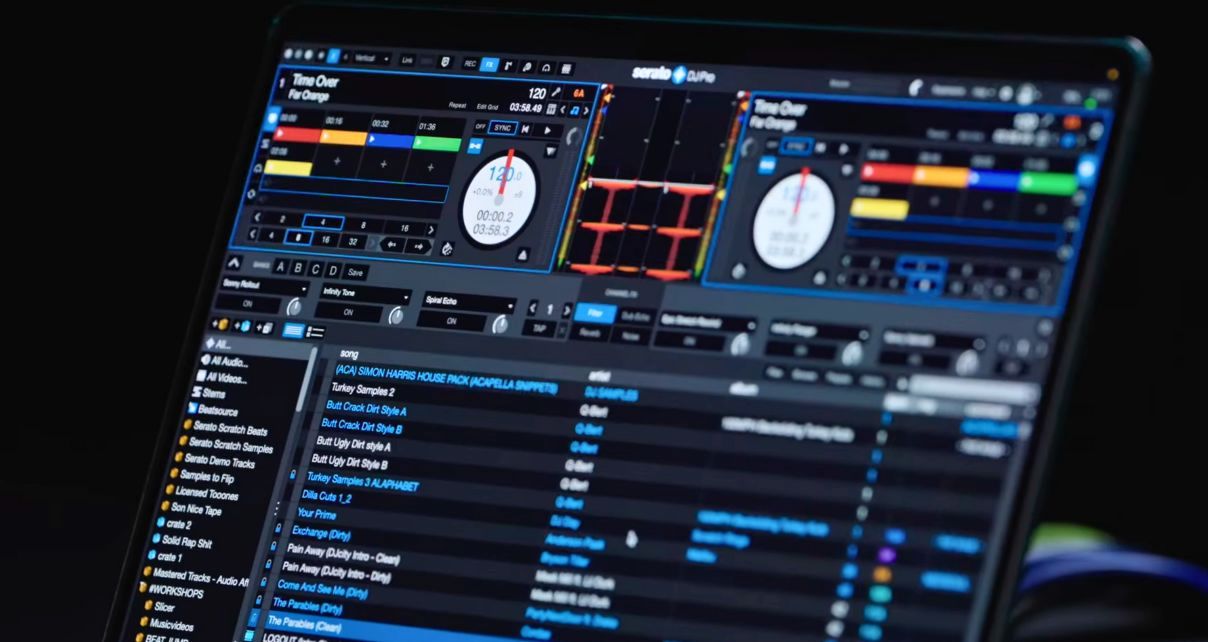
Serato’s updates were largely about filling gaps rather than pushing boundaries. The Apple Music integration in March and Spotify integration in September brought Serato in line with competitors, but these were expected features rather than innovations – and you can still only use one streaming service at a time.
The expanded third-party hardware support between November 2024 and May 2025 was more significant as a business move. Adding compatibility with Traktor Kontrol S2/S3, Pioneer DDJ-200/DDJ-400, DDJ-RB and Traktor Z2 means you can try Serato on certain (older) hardware without buying Serato-branded kit.
November’s Serato DJ 4.0 brought a library overhaul with crate search, colour coding, emoji track ratings and streaming track organisation. These are basic features that should have been standard years ago. Some beta users reported crashes, and initially, the community advised being careful for live use.
Sign up to Tuesday Tips
 Free newsletter
 Your weekly digest of the latest training, gear reviews, industry news, and exclusive tips and tricks to help you stay ahead in your DJing.
We collect, use and protect your data in accordance with our Privacy Policy.
Rekordbox: Steady but unexciting
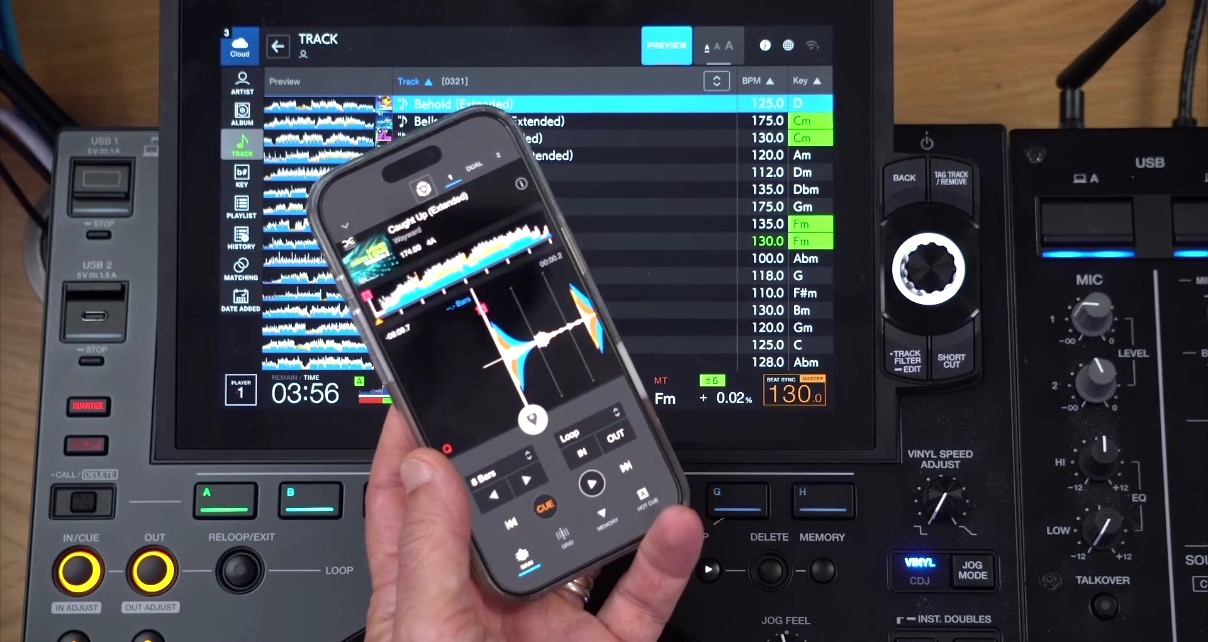
Rekordbox’s year was about integration work rather than new features. Beyond the Apple Music and Spotify integrations, the platform focused on hardware integration (version 7.2.2 in September added support for the CDJ-3000X) and cloud finessing, plus the mobile app maturing too.
The OneLibrary integration in version 7.2.5 was straightforward and well done, although maybe not exactly what some had hoped for (see below). Likewise the four-stem upgrade in December addressed a long-running complaint, but didn’t address the audio quality, sadly. It feels like Rekordbox is chasing rather than leading right now.
Traktor: Hardware leading the way
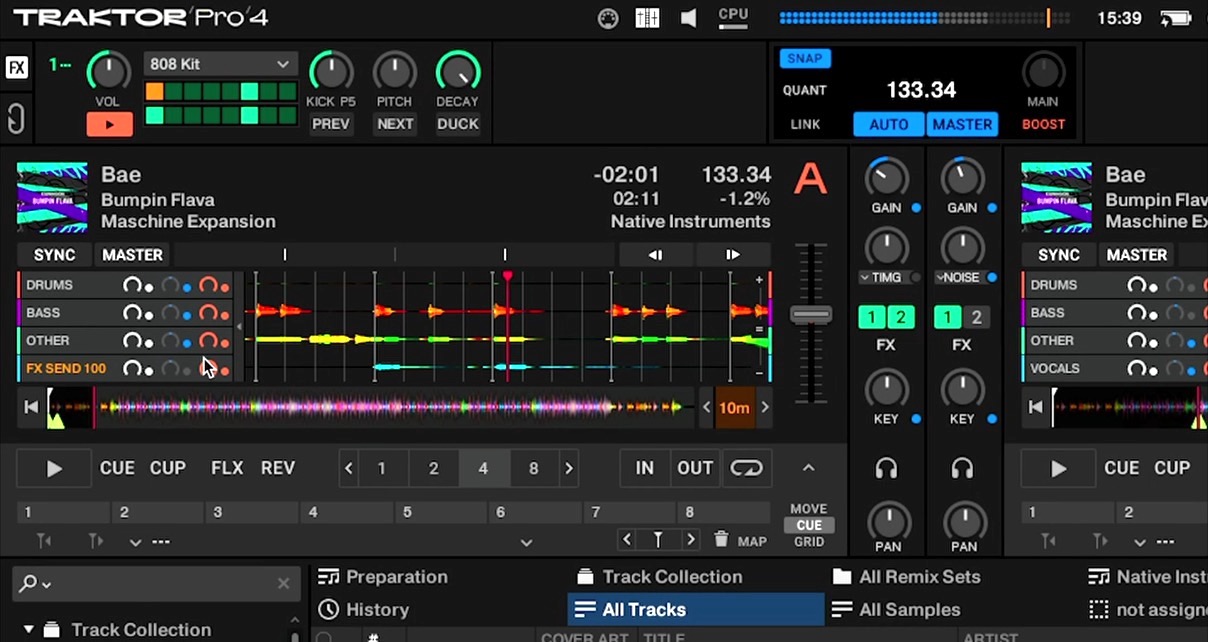
Traktor had a quiet 2025 on the software side, though that’s typical for Native Instruments. This was one of the few companies where hardware outshone software, with the new Traktor MX range launching to replace the S2 and S4. The MX2 (and imminent MX4) herald a new generation of Traktor controllers that should continue into 2026.
November’s launch of Traktor Play, a £49 entry-level version with simplified stems and Beatport streaming, comes bundled free with the Pioneer DJ/AlphaTheta DDJ-FLX4 and DDJ-FLX2 controllers. Native Instruments called this an “exciting new chapter”, marking the first time Traktor officially supported competitor hardware. But it’s essentially a cut-down version of the software – more of a marketing tool than an improvement. The fact it costs £49 rather than being free like Serato Lite drew criticism, too.
Cross DJ: It’s back!
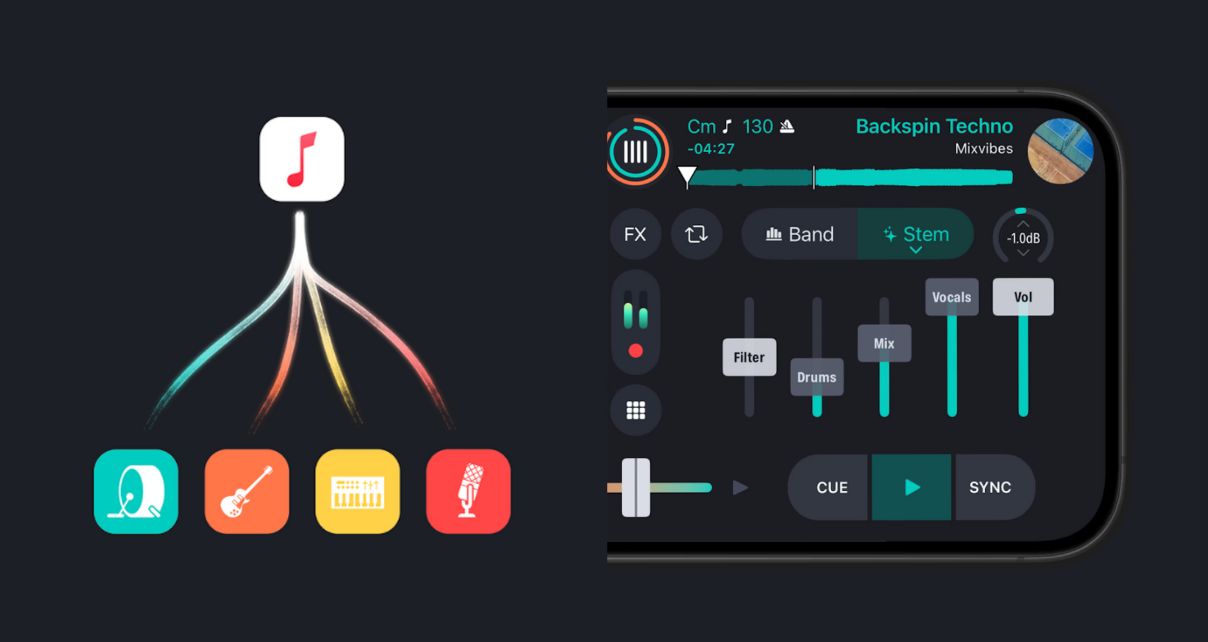
MixVibes announced Cross DJ 5 in November, a complete rebuild unifying iOS, Android and macOS under a single codebase. It adds real-time stem separation and 30+ effects with a £14.99/year subscription – the most affordable among major platforms. But with limited hardware support and no Windows version at launch, it’s hard to see where the market is. SoundCloud Go+ was the only streaming service available at launch, though Beatport integration is apparently coming.
Read this next: Hardware vs Software Effects in DJing – What’s The Difference?
Trends In software
Beyond individual platform updates, several broader trends shaped the DJ software landscape. These shifts affected all DJs, regardless of their chosen platform. Here’s what changed across the board…
The year streaming got serious
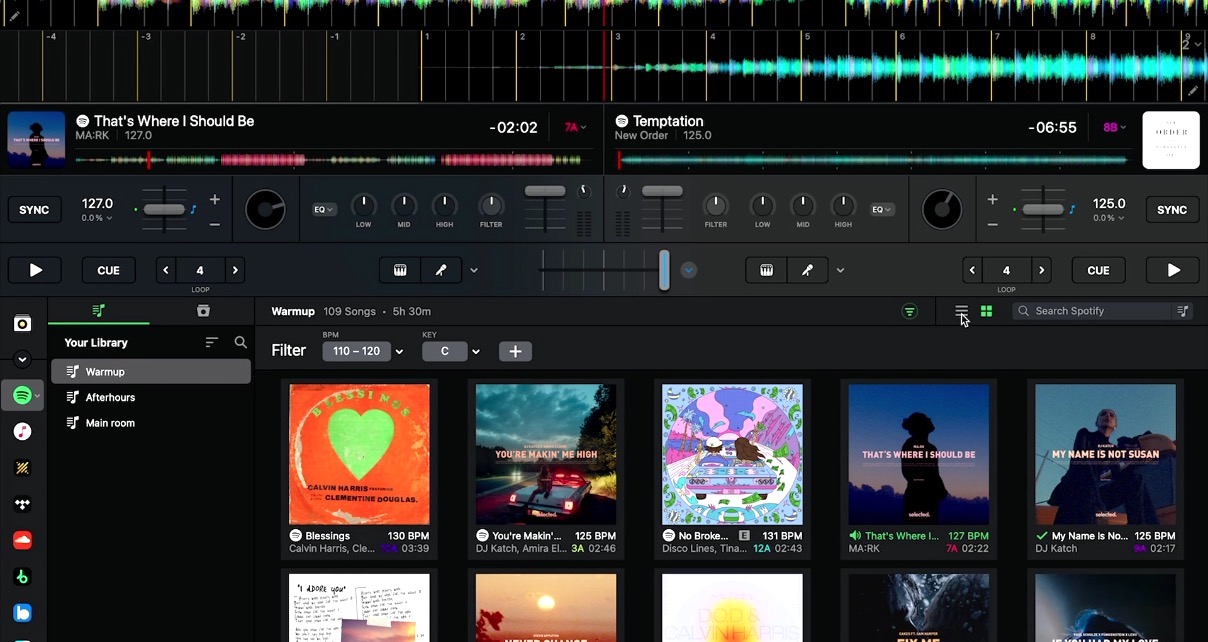
The biggest shift was Apple Music and Spotify properly entering the DJ software space. In March, Apple Music rolled out integration across Serato, Rekordbox, Djay Pro and Engine DJ, giving DJs access to over 100 million tracks. For mobile and wedding DJs dealing with last-minute requests, this changed things. Performance was close to locally downloaded files, which was encouraging.
Read this next: The Best Music Streaming Services For DJs In 2026
Then in September, Spotify made its return after backing out in 2020, appearing in Serato, Rekordbox and Djay Pro. Both Apple Music and Spotify integrations are (in theory) limited to personal, non-commercial use, which has caused some grumbling in the mobile DJ community – but in practice? Not sure anyone’s watching…
For Engine DJ users, Apple Music integration in March meant accessing streaming catalogues directly on standalone hardware like the SC Live 2/4, Prime Go+ and Prime 4+ with no laptop required. The catch? Stems don’t work on Apple Music or Spotify tracks.
OneLibrary: A step towards everyone playing nicely?

October saw the launch of OneLibrary, a cross-platform library format backed by AlphaTheta (Pioneer DJ), Algoriddim and Native Instruments. For the first time, you can export USB drives from Rekordbox, Traktor or Djay Pro and have your cue points, loops and library structure work across all three platforms. This is particularly useful if you prepare sets in one software but perform on CDJ-3000X, CDJ-3000 or Opus-Quad hardware.
The initiative got cautious optimism, with some noting you won’t get personalised CDJ settings when using non-Rekordbox exports, and many also pointing out this is not, in reality, “one library” for all DJ software. More significantly, Serato, VirtualDJ and InMusic (Engine DJ) are missing from the official OneLibrary partnership, which limits its usefulness. It’s a promising first step, but there’s a way to go.
Stems: Now everyone’s got them

Stem separation continued across platforms, though quality varies. Engine DJ made headlines in November 2024 by bringing stem separation to standalone hardware with version 4.2, becoming the first platform to offer vocals, melody, bass and drums separation without a computer, albeit with initial prep necessary. (It’s free on the Prime 4+ but costs £9.99 one-time for other devices.) Standalone Pioneer DJ and AlphaTheta gear still doesn’t have stems at all.
As stated above, Rekordbox finally upgraded to four-stem separation in December with version 7.2.8, separating tracks into vocals, instruments, bass and drums rather than the previous three-stem set-up. Users noted it still lags behind Serato and VirtualDJ for quality, but it’s progress.
Sign up to Tuesday Tips
 Free newsletter
 Your weekly digest of the latest training, gear reviews, industry news, and exclusive tips and tricks to help you stay ahead in your DJing.
We collect, use and protect your data in accordance with our Privacy Policy.
DJ Software 2026: What’s Next?
The clearest pattern was external companies – specifically Apple and Spotify – driving change rather than the software developers themselves. While streaming integration has existed for years through services like Tidal and Beatport, Apple Music and Spotify bring mainstream legitimacy and catalogue depth that smaller services couldn’t match.
Stem separation has moved from experimental to expected, though quality varies significantly. VirtualDJ and Algoriddim are pushing creative boundaries with AI features, while Serato, Rekordbox and Traktor seem content to add expected improvements and catch up to industry standards.
Every DJ course you’ll ever need, unlocked for life ✅ Click here for All-Access Pass
OneLibrary represents the first serious attempt at cross-platform library compatibility, but with Serato and Engine DJ absent, it’s more of a promising start than a complete solution.
In 2026, we’re hoping the major platforms – particularly Serato, Rekordbox and Traktor – will move beyond safe updates and deliver innovations worthy of their market positions. Right now, if you want innovation in DJ software, you’re looking at Algoriddim and VirtualDJ. The others are simply keeping up.


Phil Morse


